
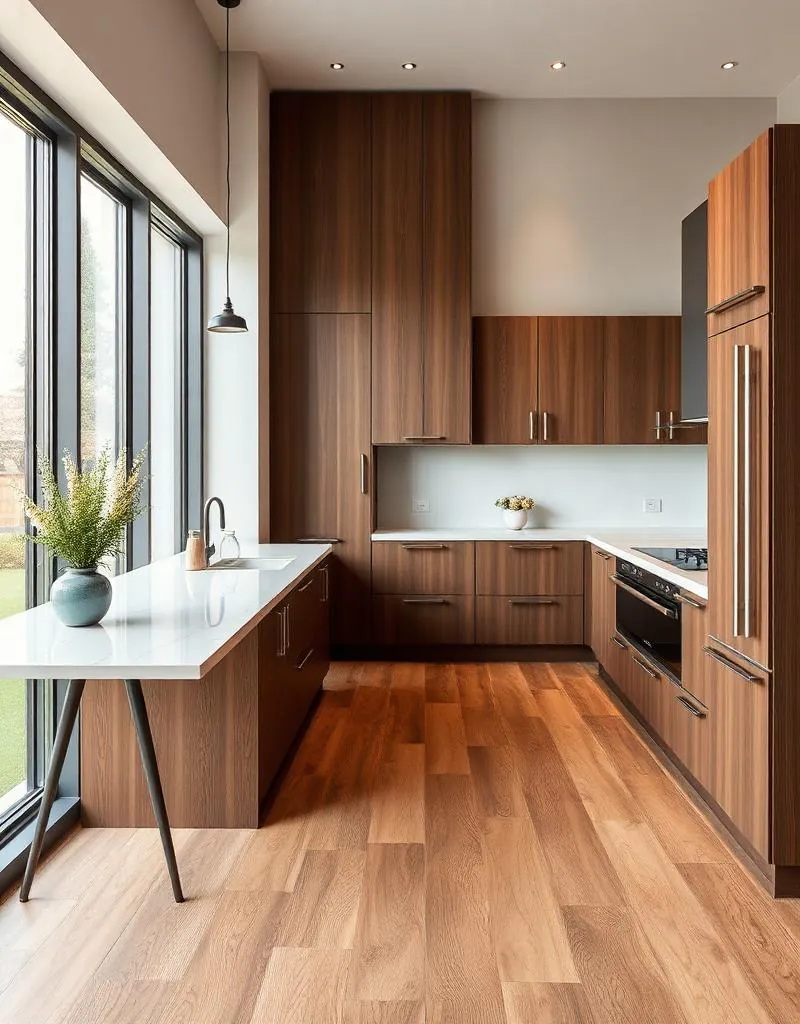
Luxury Vinyl Plank Flooring
Luxury Vinyl Plank Flooring Michigan
Waterproof, Pet-Friendly & Engineered to Last
SPC and WPC core specialists. 20-mil wear layers. Realistic grain textures and architectural finish details that make every floor look like it cost twice as much as it did.
LVP Forensic Fast-Facts
- LVP (Luxury Vinyl Plank)
- A multi-layer synthetic flooring with a photographic wood image layer protected by a wear layer, installed as a floating floor
- SPC Core (Stone Plastic Composite)
- Rigid, extremely durable, less forgiving to subfloor imperfections — tongue-and-groove failure risk without proper prep
- WPC Core (Wood Plastic Composite)
- Slightly more flexible, marginally more forgiving — but same flatness standards apply
- 20-Mil Wear Layer
- Industry standard protection thickness for the image layer — determines how realistic the floor looks and how long it lasts
Core Technology
The Core Decision: SPC vs WPC
SPC — Stone Plastic Composite
SPC is harder and more rigid — it is the more durable choice, but because of that rigidity it is completely unforgiving to subfloor imperfections. If your subfloor has dips or crowns outside NWFA flatness tolerances, the tongue-and-groove locking system on an SPC floor will fail over time.
WPC — Wood Plastic Composite
WPC is slightly more flexible and marginally more forgiving, but that does not mean subfloor preparation should be any less meticulous — industry flatness standards apply to both. This is why choosing the right installation contractor matters as much as choosing the right floor.
Both cores require meticulous forensic subfloor preparation. The core choice changes the risk level, not the preparation standard.
Wear Layer Science
The 20-Mil Standard: What We Look For
The 20-mil wear layer is the industry standard that protects the wood image printed into the product. But wear layer thickness alone is not the only measure — what we look for is a floor where the grain also stands out in the physical texture of the surface, not just in the printed image. High-definition embossing means the texture of the plank matches the grain of the image, making the floor feel and look like real wood.
We spec LVP that delivers a genuine high-end wood aesthetic at a fraction of hardwood cost — that is the goal for every LVP project we install. Browse our CALI Vinyl collections to see the standard we hold.
Installation Planning
Run Length and Transitions
Certain LVP products have manufacturer-specified maximum run lengths before a transition is required — typically in doorways or between rooms. We pay careful attention to these specifications during installation planning. Most installers use cheap plastic T-moldings that immediately undercut the look of the floor.
We source our transition profiles from Ali Trims transition profiles — a premium European manufacturer — giving every transition the same architectural quality as the floor itself.
The 1 Wood Floors Difference
The Finishing Details: Mid-Range to Masterpiece
A mid-range LVP floor can look like a high-end architectural installation when the details are done correctly. We combine three finishing elements that most installers never consider:
Ali Trims
European-sourced metal transition profiles that replace the standard plastic T-moldings. Used at all doorway transitions and run-length breaks.
TOP Step Flush-Mount Vents
Floor vents that match the exact grain and color of the LVP floor. Instead of a metal or plastic grille sitting on top of the floor, the vent sits flush and disappears into the surface. Available in color-matched coupling vents or offset flush-mounted iron vents for an architectural contrast look.
Consistent Detail Standard
Every floor we install — LVP, hardwood, or laminate — gets the same level of attention to these finishing details. Nothing is an afterthought.
The result is a floor that looks like it cost twice as much as it did.
From subfloor engineering to architectural finish details.
From subfloor engineering to architectural finish details — our LVP installation process is documented in full.
Related Services
Complete your LVP project.
Service Areas
LVP Installation Across Michigan
Google Reviews
What your neighbors are saying
"Great experience working with 1 Wood Floors installing our new solid wood floor. Megan helped us select the perfect species and Aaron's installation was flawless. The attention to detail from start to finish was exceptional."
"We had a great experience with our flooring install. Our installer Aaron was very professional, he set the standard by which everyone will be judged against. He cleaned up everyday and the way he put the extra effort in to level and prep our floor the right way made us very glad that we got our flooring here. They make the floors themselves and the product speaks for itself. We looked around at many places and couldn't find anything comparable to their product."
"We recently replaced our family room carpet with custom stained hickory. The whole team from 1 Wood Floors, Ed, Megan and Aaron were great to work with. The floor looks incredible and the color match was perfect."
"We've recently had the privilege of working with Megan and Ed at 1 Wood Floors and are thrilled with our new flooring. After much deliberation on species and finish, they guided us to exactly the right product for our home."
Luxury Vinyl Plank FAQs
LVP flooring questions answered.
SPC (Stone Plastic Composite) has a rigid limestone core that is harder and more durable but completely unforgiving to subfloor imperfections — tongue-and-groove failure is a real risk without forensic subfloor preparation. WPC (Wood Plastic Composite) is slightly more flexible and marginally more forgiving, but the same NWFA flatness standards apply to both. The core choice changes the risk level, not the preparation standard.
We specify a minimum 20-mil wear layer as our baseline. This is the industry standard that protects the high-definition photographic image printed into the plank. Budget LVP uses 6 to 12 mil layers that scratch through within a few years. Beyond thickness, we look for high-definition embossing where the physical texture matches the printed grain — that is what makes LVP look and feel like real wood.
Yes. Most SPC and WPC products are compatible with radiant heat systems when the surface temperature stays below 85 degrees Fahrenheit. We verify manufacturer specifications for every product and ensure your radiant system is properly calibrated before installation begins.
Manufacturers specify no more than 3/16 inch variation over 10 feet. We hold ourselves to 1/8 inch because on a rigid SPC floor, that extra tolerance is the difference between a 20-year floor and a warranty claim in year two. Our forensic subfloor process uses laser-guided flatness mapping to identify and correct every dip and crown before installation.
Maximum run lengths vary by manufacturer and product — typically ranging from 30 to 50 feet in any direction before a transition strip is required. We pay careful attention to these specifications during installation planning and use Ali Trims European metal transition profiles at every break point, replacing the cheap plastic T-moldings most installers use.