
Reclaimed & Wide Plank Flooring · Michigan
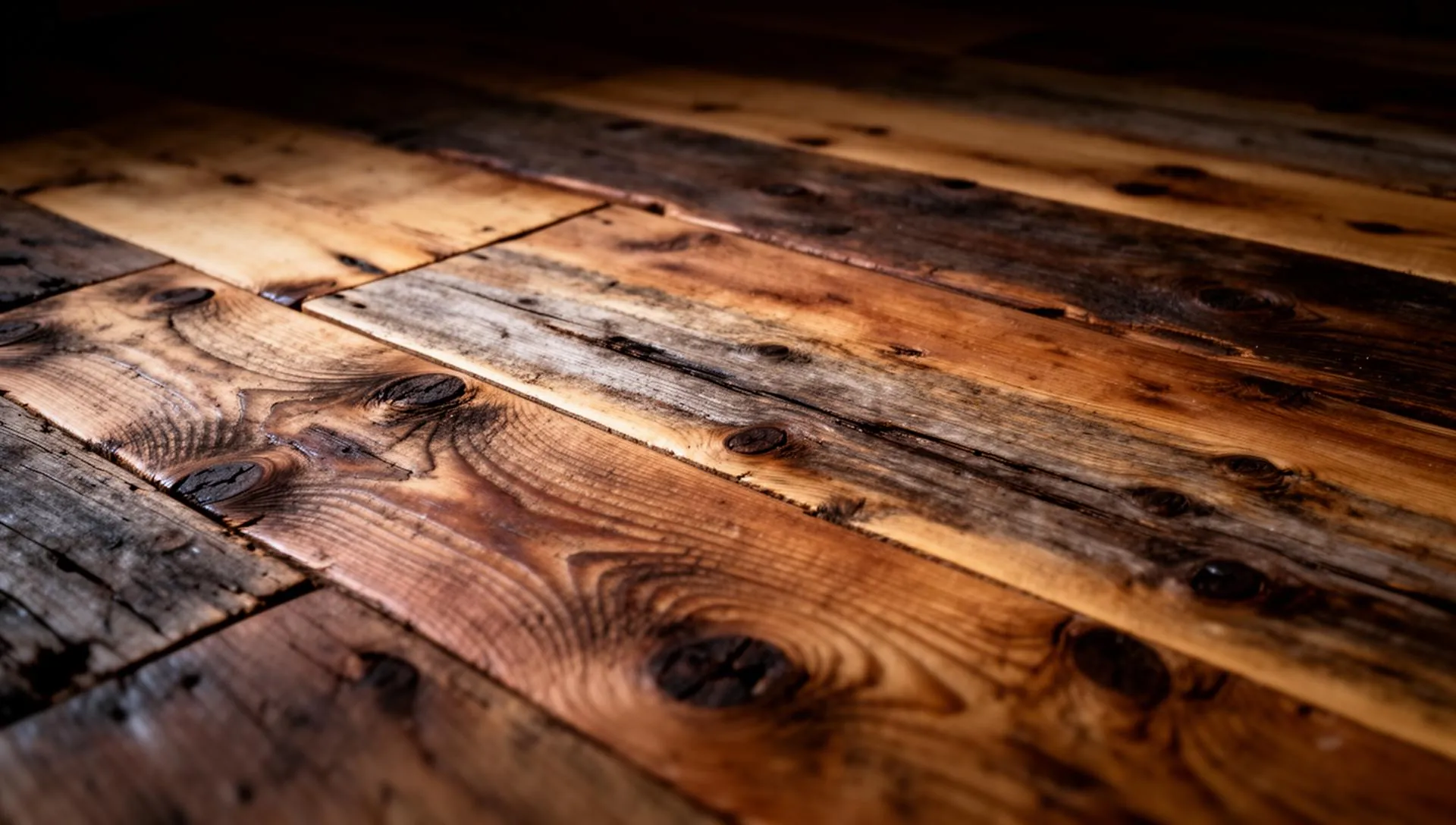
Reclaimed Barnwood Flooring in Michigan
Reclaimed wood flooring Michigan homeowners have trusted for three decades. Milled from 100+ year-old American barns through our exclusive Olde Wood Ltd partnership and installed by a Four NWFA Certified team Installer, Sand & Finisher, Inspector, and Sales Advisor under one roof.
Michigan's Reclaimed Authority
1 Wood Floors is Michigan's Four NWFA Certified reclaimed wood flooring specialist the same team holds NWFA Certifications as Installer, Sand & Finisher, Wood Flooring Inspector, and Sales Advisor, alongside a Licensed Michigan Residential Builder credential and full insurance. We earned the 2017 NWFA Wood Floor of the Year (Best Restoration Makeover) on a reclaimed project a West Virginia barn re-milled and installed in Farmington Hills. For three decades we have installed reclaimed material in Michigan homes, and we hold an exclusive Michigan partnership with Olde Wood Limited for their Antique Reclaimed collection. Reclaimed flooring is a technical discipline distinct from new hardwood installation; the credential stack above is the one you want on the job.
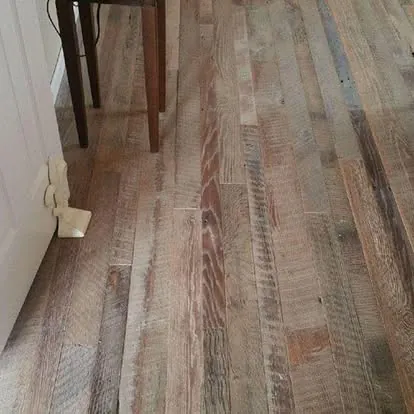
Reclaimed Barnwood · Rubio Monocoat White 2C Oil
Farmington Hills, Michigan · NWFA Wood Floor of the Year 2017
🏆 2017 NWFA Wood Floor of the Year: Best Restoration Makeover
From a West Virginia Barn to a Michigan Masterpiece.
This floor was crafted from a meticulous blend of reclaimed White Oak and Red Oak, salvaged directly from a historic barn in West Virginia. We custom-milled every plank and finished them with Rubio Monocoat, a plant-based oil that lets the wood's century-old character speak for itself. When you choose reclaimed, you aren't just buying a floor. You're reclaiming a piece of history.
Explore our full reclaimed wood flooring collection from Olde Wood Limited, with 20 antique species milled from authentic American barnwood.
Background
What reclaimed barnwood actually is.
Reclaimed barnwood flooring is milled from timber salvaged out of century-old American barns, factories, granaries, and timber-frame structures primarily across the Northeast and Midwest US. The wood we source through Olde Wood Ltd is typically 100 to 200 years old at the time of milling, cut from old-growth forests that no longer exist in commercial supply.
That single fact old-growth versus new-growth is what makes reclaimed structurally different from anything you can buy new. Old-growth timber was harvested from trees that grew slowly under a dense forest canopy for two centuries or more. The result is tighter grain, higher density, and greater dimensional stability once acclimated than the fast-grown plantation lumber that dominates today's hardwood supply.
Reclaimed is graded differently as well. New hardwood is graded on absence of defects Select, #1 Common, #2 Common. Reclaimed is graded character-forward: nail holes, weathering marks, saw kerf, hand-hewn texture, insect tracks, and color variation are features, not flaws. The grading conversation is about which character you want, at what density, and whether you prefer the original weathered face or a freshly resawn face that exposes the tight interior grain.
Species availability tracks what was originally built with. Reclaimed Oak (Red and White), Heart Pine, Hickory, and mixed hardwood are the workhorses. Wormy Chestnut is rare the American chestnut was effectively wiped out by blight a century ago, so every board is genuinely irreplaceable. Douglas Fir, White Pine, Tobacco Pine, and Beech/Maple round out the catalogue.
Olde Wood Antique Reclaimed 20 Species
Reclaimed wood flooring, by species.
Every tile below links into the full Olde Wood Antique Reclaimed catalogue where you can review grade, plank width, and finish options in detail.
Oak
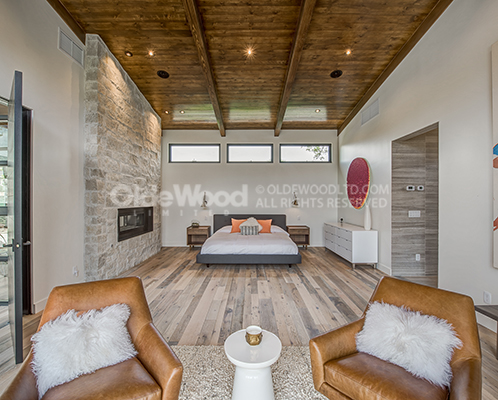
Antique Reclaimed Oak
Dense tight grain and deep patina the workhorse of American barnwood.
Oak
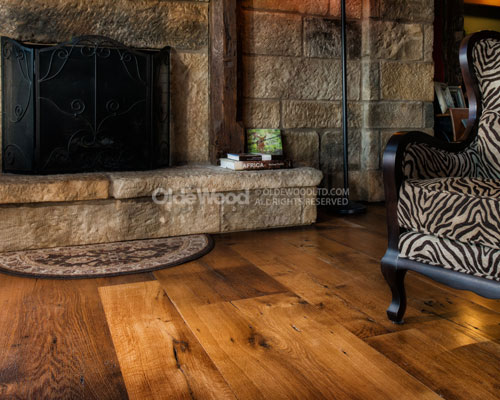
Reclaimed Oak Appearance Grade White Oak
Cleaner face with subtle character a calmer reclaimed look for modern interiors.
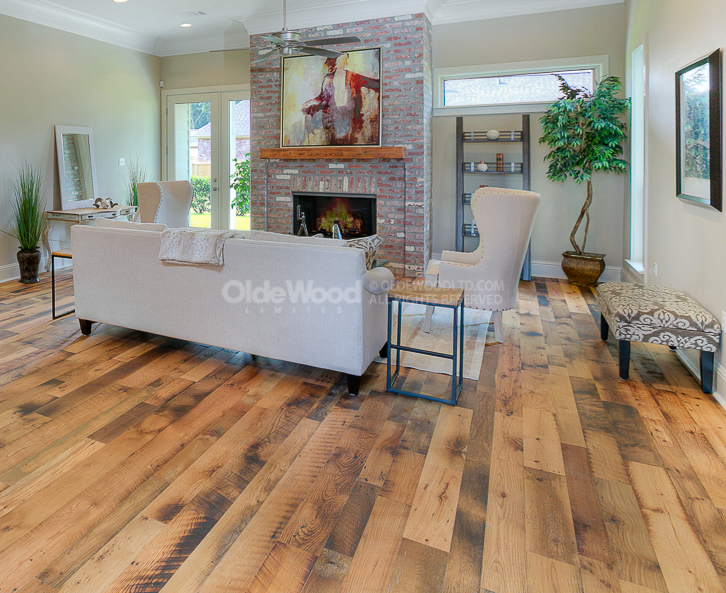
Oak
Reclaimed Oak Hit-Skip
Original band-saw kerf preserved across the face for maximum texture.
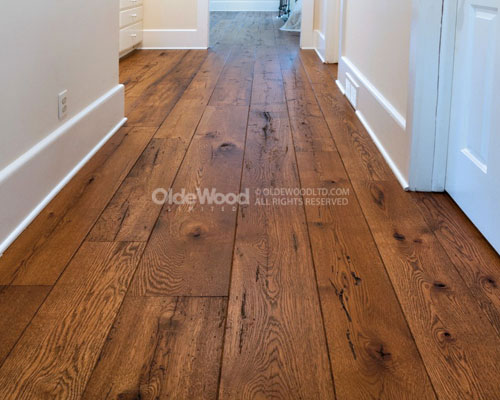
Oak
Reclaimed Resawn Oak
Freshly resawn face reveals tight old-growth grain under century-old timber.
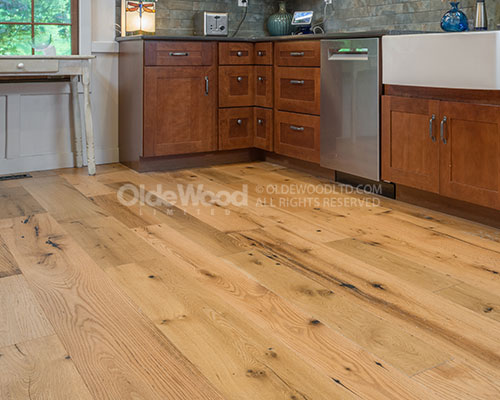
Oak
Reclaimed Resawn Oak Appearance Grade White Oak
Resawn white oak with subdued character, contemporary-leaning.
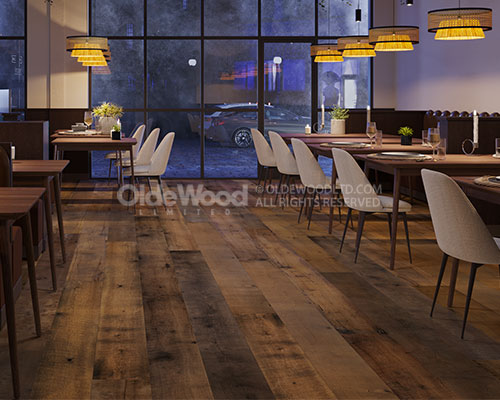
Oak
Reclaimed Oak Original Face
Untouched weathered face with nail holes, checks, and full patina intact.
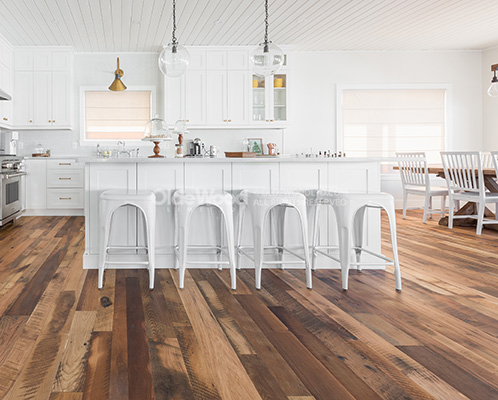
Mixed Hardwood
Reclaimed Historic Plank
Mixed hardwood blend salvaged from historic timber-frame structures.
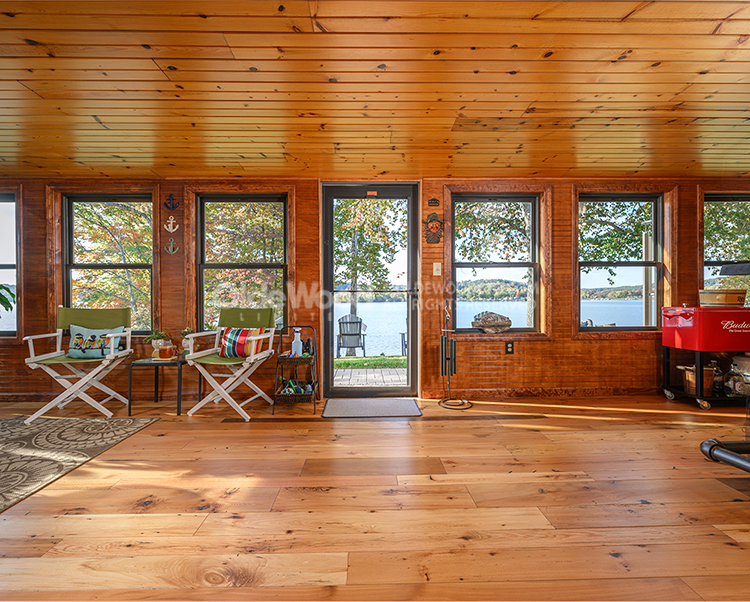
Mixed Hardwood
Reclaimed Harvest Plank
Warm mixed-hardwood harvest tones milled to wide plank.
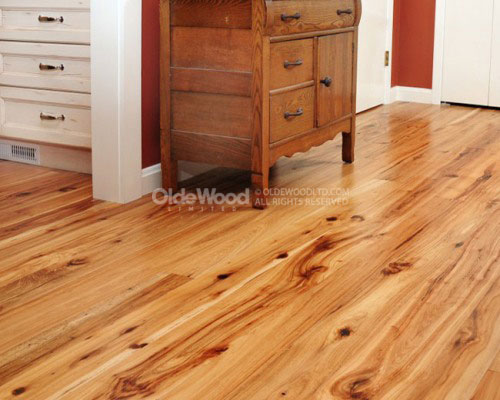
Hickory
Reclaimed Hickory
High density and dramatic color variation one of the toughest reclaimed species.
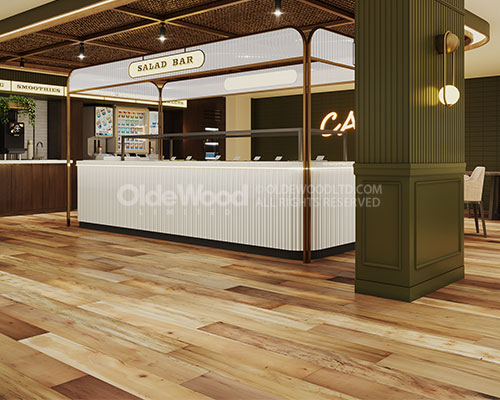
Beech/Maple
Reclaimed Beech/Maple
Lighter tones and tight grain with subtle antique character.
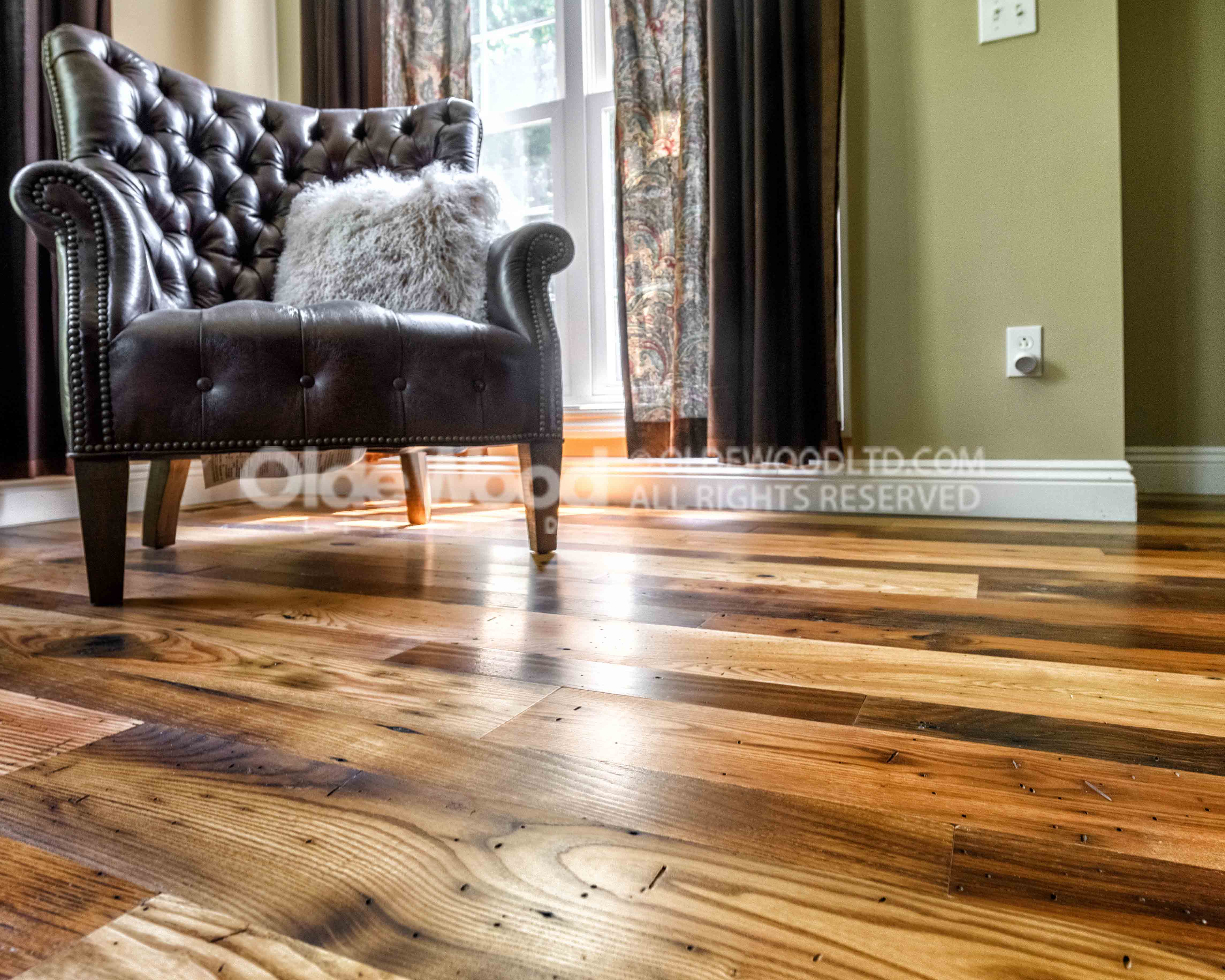
Chestnut
Reclaimed Wormy Chestnut
Rare American chestnut with wormhole character effectively impossible to source new.
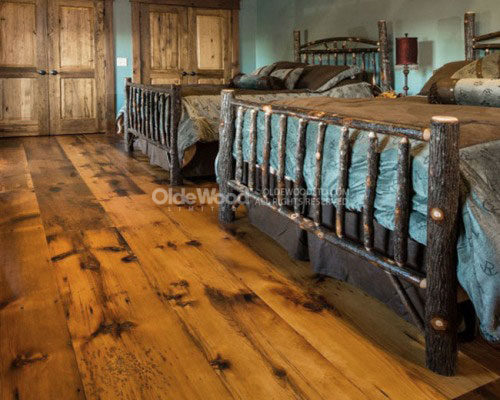
Pine
Reclaimed White Pine
Softer species with amber patina and generous knot character.
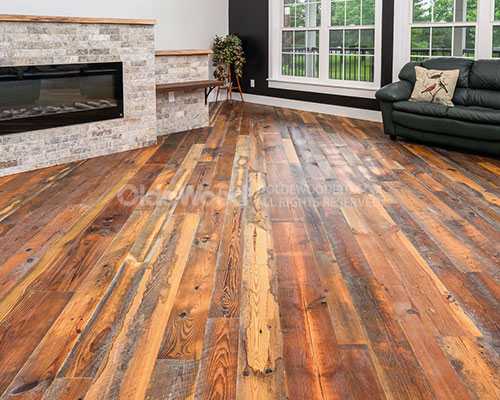
Pine
Reclaimed Tobacco Pine
Deep tobacco-brown patina from decades inside Southern tobacco barns.
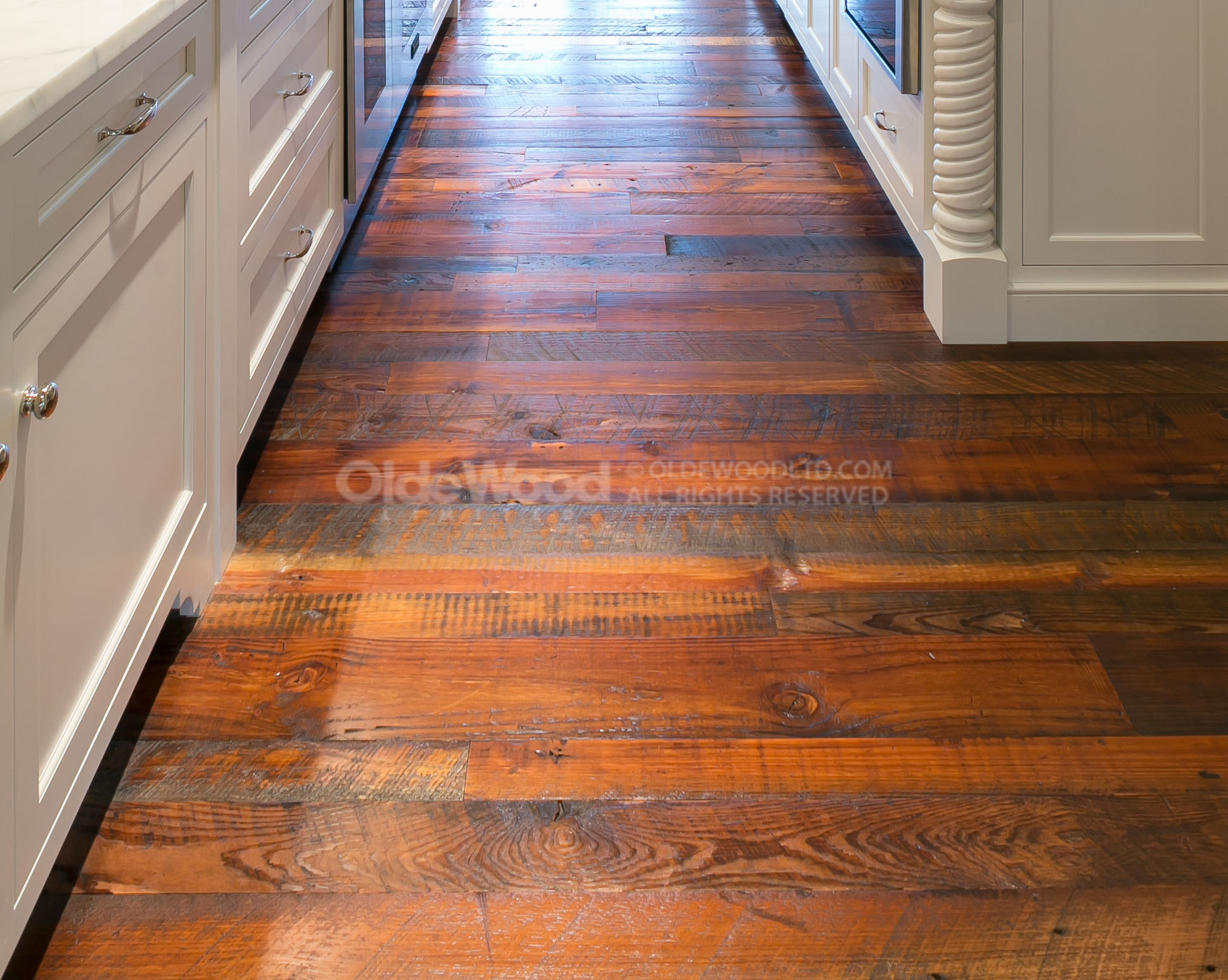
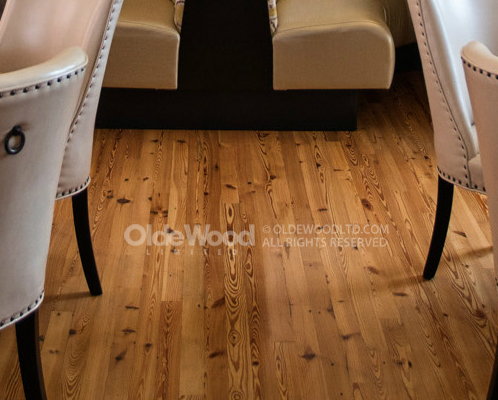
Heart Pine
Reclaimed Heart Pine Hit-Skip
Dense old-growth heart pine with preserved saw-kerf texture.
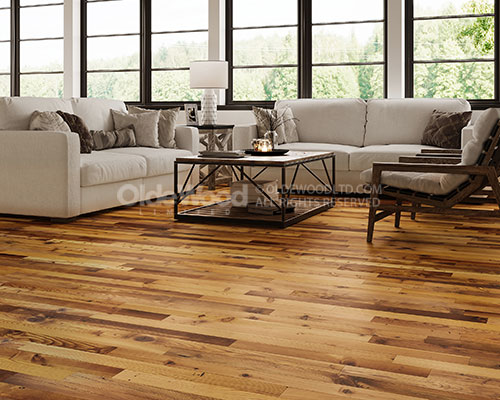
Heart Pine
Reclaimed Heart Pine Select
Cleanest heart pine grade with tight vertical grain.
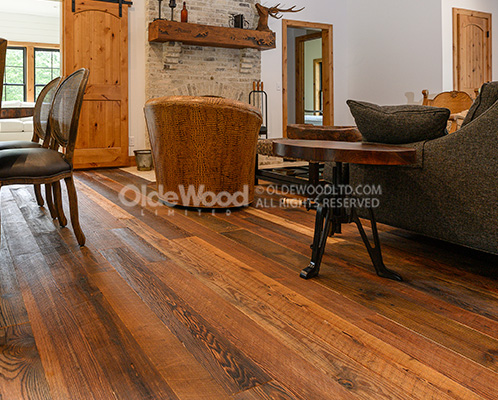
Heart Pine
Reclaimed Heart Pine Common
Character-forward heart pine with knots and rich color variation.
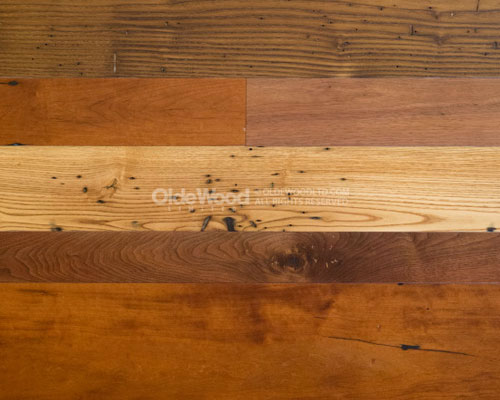
Heart Pine
Reclaimed Heart Pine Original Face
Weathered heart pine face, untouched patina straight from the barn.
Mixed Hardwood
Reclaimed Trophy Room
Premium mixed reclaimed species blend curated for statement rooms.
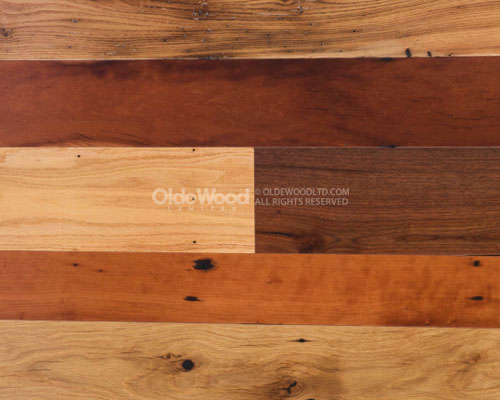
Oak
Reclaimed Oak Trophy Room
Premium oak-only reclaimed selection, curated for maximum character.
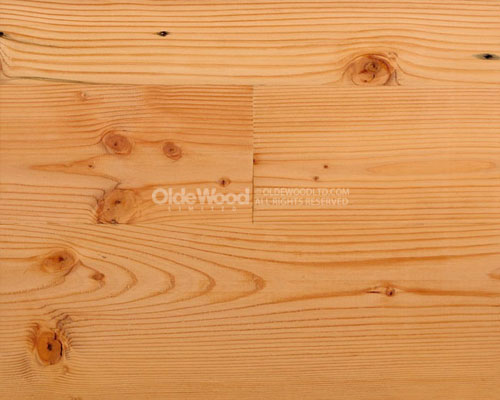
Douglas Fir
Reclaimed Douglas Fir
Wide-grain Pacific Northwest fir with warm honey tones and old-growth density.
The Artisan Process
A Journey of 30 Hands.
By the time a reclaimed floor, ceiling, or beam enters your home, it has passed through an average of 30 skilled hands. We don't just cut wood. We preserve the stories embedded in every grain.
Careful Extraction & Preservation.
Every timber is carefully dismantled, de-nailed, and kiln-dried to eliminate insects and ensure structural integrity. We treat each board as an artifact. Because that's exactly what it is.
Honoring the Original Carpenters.
Using specialized trade skills, we mill the wood while intentionally preserving the original saw marks and patina left by carpenters over a century ago. Their craftsmanship becomes part of your home's story.
Installation by an Artist.
Because every single board is uniquely different, reclaimed wood can't be installed like production flooring. It demands an artist's eye balancing character, color, and grain plank by plank.
NWFA Inspector Perspective
Why reclaimed installs differently than new hardwood.
Reclaimed material behaves differently at every stage: moisture, structure, subfloor tolerance, and finish chemistry. What follows is the framework we apply on every reclaimed project as NWFA Certified Wood Flooring Inspectors.
Moisture history and acclimation
Century-old wood carries a moisture story you cannot skip. Unlike new kiln-dried lumber that leaves the mill at a controlled moisture content, reclaimed timber has spent decades absorbing and releasing moisture through seasonal cycles. On arrival we measure moisture content with pin meters, compare it against the subfloor and the room's expected equilibrium moisture content (EMC) per NWFA guidelines, and set an acclimation window before installation begins. Skipping this step is the single most common cause of reclaimed floor failure.
Nail holes and structural integrity
Nail holes and surface checks are aesthetic features when the plank is structurally sound and defects when it isn't. As certified inspectors we grade every plank before it enters the mill: sound wood around the hole, no through-checks that compromise the tongue or groove, no active insect damage, no rot below surface patina. Planks that fail grading come out of the run. This is why reclaimed sourced through a certified team looks and performs differently than salvage-yard barnwood.
The 5-Inch Rule and wide-plank reclaimed
Most reclaimed floors are wide plank 5 inches and up because narrow boards from old-growth timber would be a waste of the material. NWFA installation guidelines require nail-plus-adhesive assist on any plank 5 inches or wider on wood subfloor. On reclaimed this is not optional. Wide plank moves more than narrow strip, and old-growth density means the plank will win any fight against a mechanical fastener alone. Every reclaimed installation we do on wood subfloor is nailed and glued per NWFA specification.
Subfloor flatness for reclaimed
The NWFA subfloor flatness standard within a defined tolerance over a set span, per NWFA guidelines is even more critical under wide-plank reclaimed. Reclaimed planks have less flex than engineered flooring, and any subfloor deviation telegraphs directly into the finished floor as hollow spots, gaps, or squeaks. Before a single plank goes down we survey the subfloor with a straightedge and self-level or plane whatever is out of tolerance. See our subfloor leveling scope for how this is quoted and executed.
Choosing the right finish
Finish selection on reclaimed is not aesthetic-only it's chemical. The right systems for reclaimed character surfaces are plant-based hardwax oils (Rubio Monocoat, Pallmann Magic Oil) or 2-component waterborne polyurethane. Both penetrate character marks cleanly, allow spot repair, and let the wood's natural depth read. Cheap oil-modified polyurethane fails on reclaimed for two reasons: it pools in nail holes and checks (drying to a plastic slick), and it ambers heavily over reclaimed patina, muddying the exact color the client bought the floor for. We do not install oil-modified poly on reclaimed. Ever.
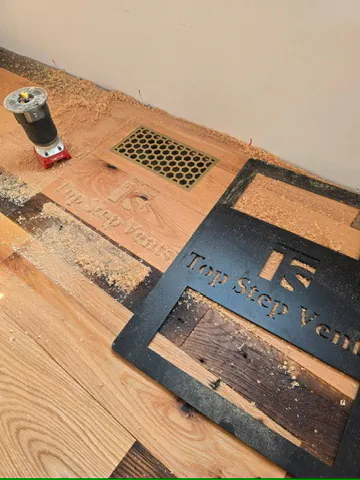
Artisan Detail
Preserving the Era: Authentic Architectural Vents.
When installing a century-old reclaimed floor, a modern drop-in vent instantly shatters the illusion. To preserve the authenticity, we custom-fabricate flush-mounted registers directly from the reclaimed material itself matching the patina and grain to the surrounding planks. We can also integrate period-accurate raw steel or bronze flush-mounts. Our goal is to make the modern HVAC system completely disappear into the history of the floor.
Local Conditions
Michigan climate and reclaimed wood flooring.
Michigan swings hard between seasons dry interior air under forced-air heat all winter, then humid summers that push interior relative humidity well above winter lows. Wide-plank reclaimed responds to that swing more than narrow-strip new hardwood does, which is why acclimation and HVAC coordination matter as much as the installation itself for reclaimed wood flooring Michigan projects.
Equilibrium moisture content (EMC) targets are region-specific. Southeast Michigan Metro Detroit, Ann Arbor, Livonia, Northville, Plymouth runs a different indoor EMC range than Northern Michigan cottage country (Traverse City, Petoskey, Harbor Springs). We calibrate acclimation moisture targets to the actual home per NWFA guidelines rather than a generic national number, and we test each room individually before install day.
Acclimation windows for reclaimed are longer than for new hardwood, and we hold the schedule until the wood and subfloor meet spec. Lakefront and seasonally-occupied homes need a different strategy again a cottage that sits closed and dehumidified from October through May will drive a reclaimed floor toward gaps every winter unless HVAC is committed to during the off-season. We evaluate this during the site visit and set expectations before contract.
Current Project
Work in progress.
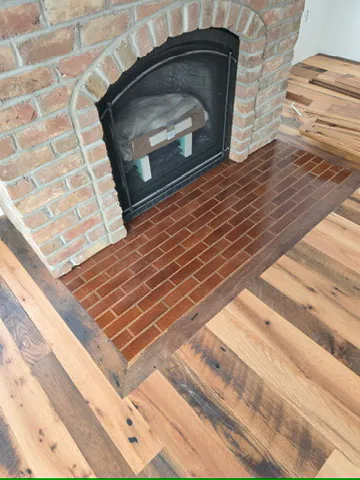
Reclaimed Antique Oak & Brick Hearth
Lexington, Michigan
Brass Honeycomb Flush-Mount Register
Lexington, Michigan
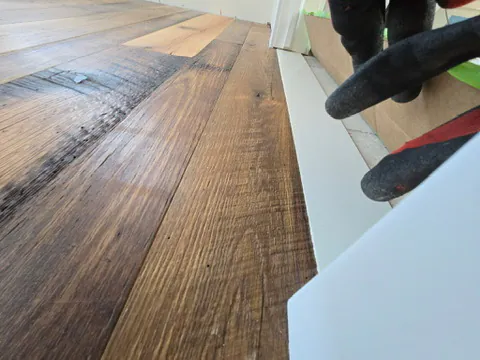
Antique Oak Original Saw Mark Patina
Lexington, Michigan
Reclaimed Ceilings & Beams
Antique Douglas Fir thermally modified.
8-inch wide plank reclaimed Douglas Fir ceiling with a fabricated beam. Carefully thermally modified and installed by our artisan team.
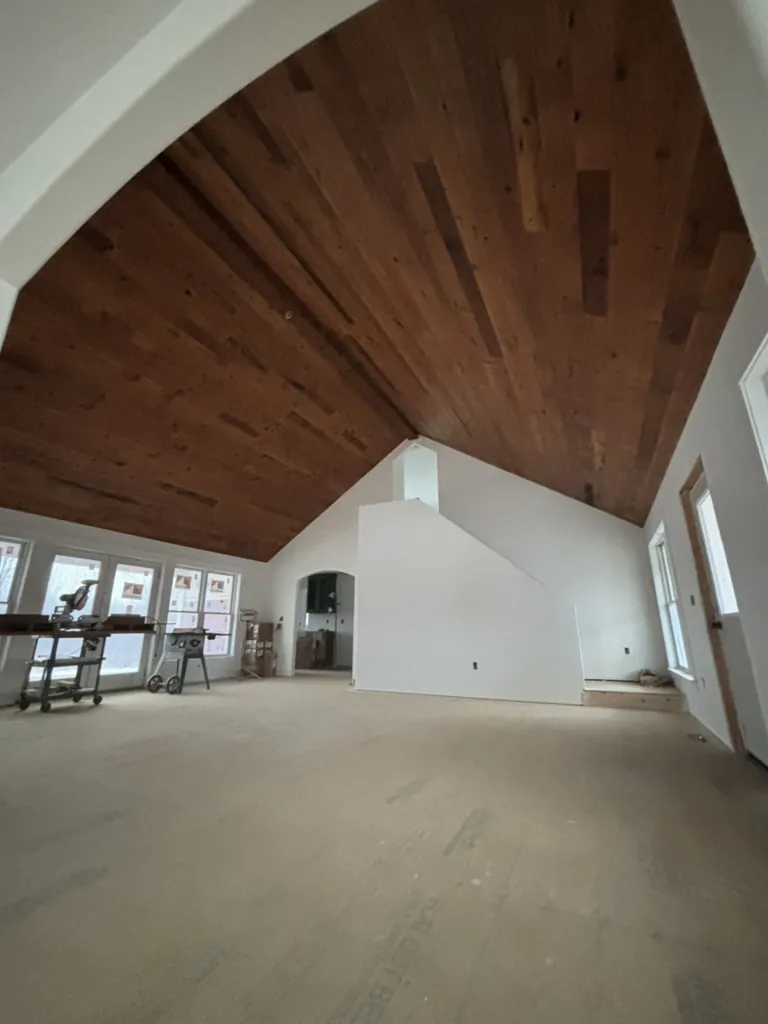
Antique Douglas Fir Vaulted Ceiling
Lexington, Michigan
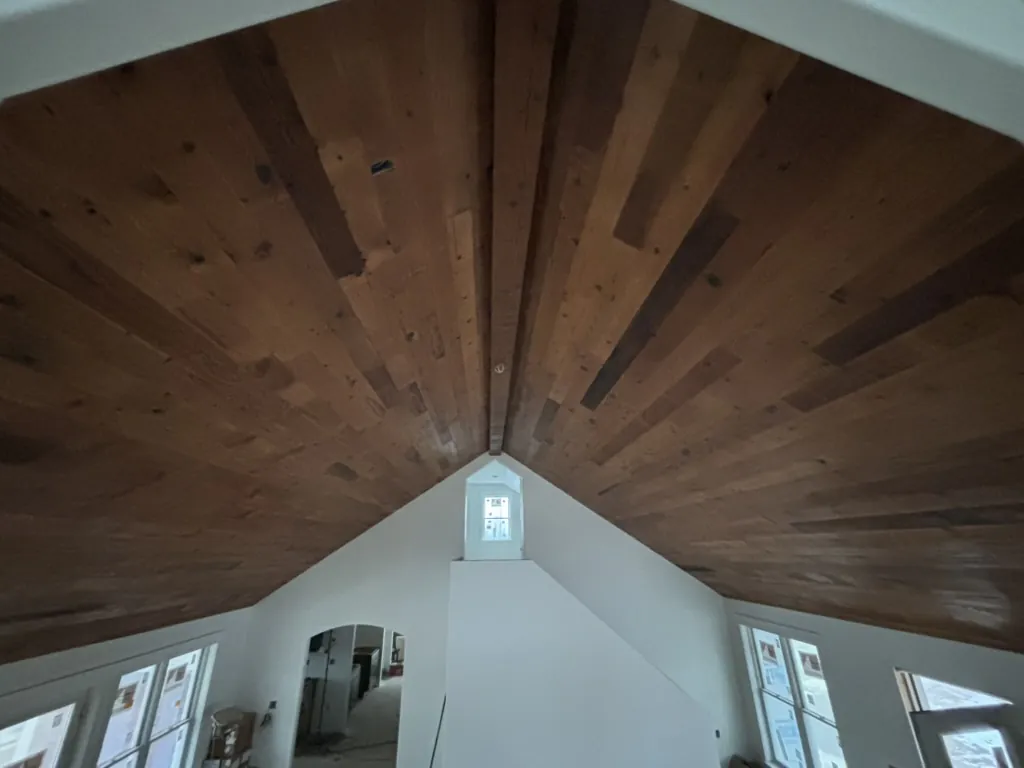
Cathedral Ceiling & Fabricated Beam
Lexington, Michigan
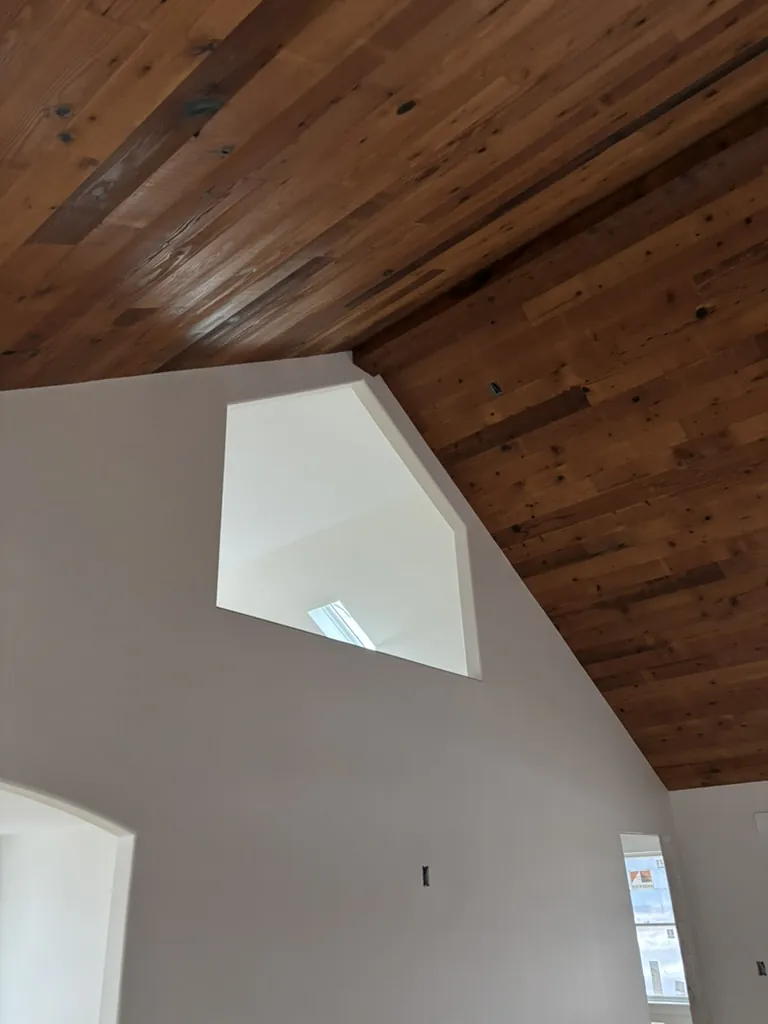
Thermally Modified Fir Detail
Lexington, Michigan
Buyer's Guide
How to choose reclaimed flooring for your home.
Species by aesthetic. Reclaimed Oak and Hickory read traditional and hold up under high-traffic family use. Wormy Chestnut and Trophy Room blends read historic-estate. Douglas Fir and Beech/Maple lean lighter and more contemporary. Heart Pine sits in between warm amber tones that work as easily in a modern kitchen as in a farmhouse.
Plank width and character density. Wider planks mean fewer seams and a calmer overall floor even when each plank is character-forward. Narrower widths (still wide by modern standards 5 to 6 inches) read busier because there is more edge per square foot. Hit-Skip and Original Face faces read as high-character; Resawn and Appearance Grade faces read as calm reclaimed.
Finish choice by lifestyle. Homes with kids and pets are usually best served by 2-component waterborne polyurethane hardest wearing surface, easiest to spot-repair. Clients who want the natural low-sheen look and are willing to recoat every few years should be on hardwax oil (Rubio Monocoat or Pallmann Magic Oil).
New construction vs renovation retrofit. New builds let us set HVAC commissioning and acclimation windows into the schedule from the start. Renovation retrofits work equally well but require a longer acclimation window in the existing home before install day. Either way, we handle moisture testing through final finish as one scope.
Reclaimed Wood Flooring Michigan
Reclaimed barnwood, straight answers.
Reclaimed wood flooring in Michigan typically starts in the mid-teens per square foot for material and rises from there depending on species, plank width, grade, and finish. Rare species such as Wormy Chestnut and wide-plank Heart Pine sit well above common Reclaimed Oak. Installed pricing also reflects subfloor preparation, acclimation time, and finish system see our installation cost breakdown for how each variable moves the number. We quote reclaimed as a full turnkey scope, never a per-square-foot commodity price.
Yes and often more stable than newly kiln-dried lumber. Old-growth timber was harvested from slower-grown trees with tighter grain and higher density than most modern hardwood. As an NWFA Certified Wood Flooring Inspector, we grade every reclaimed plank for checks, splits, insect damage, and structural integrity before it enters the mill. Nail holes and surface character do not compromise structural performance when the plank has been properly graded and re-milled.
Reclaimed material carries a longer moisture history than kiln-dried new hardwood and needs additional acclimation time on-site before installation. We follow NWFA guidelines for equilibrium moisture content (EMC) targets specific to Southeast Michigan and monitor both the wood and the subfloor with pin meters until they are within spec. Acclimation windows for wide-plank reclaimed are typically longer than for a comparable new hardwood installation we set expectations in the project timeline before crews arrive.
In most cases, yes. Solid reclaimed and thick-sawn engineered reclaimed both retain a meaningful wear layer that can be sanded and refinished multiple times. Reclaimed with an intentional Original Face or Hit-Skip texture is a different conversation aggressive sanding removes the character that made you buy the floor in the first place, so we usually recommend a screen-and-recoat rather than a full sand. See our refinishing cost guide for how we approach reclaimed refinishing scopes.
It can, with the right species and platform. Denser reclaimed species and quarter-sawn cuts move less seasonally and are the safer choice over radiant. Wide-plank flat-sawn Oak or Heart Pine over radiant requires an engineered platform, careful moisture management, and radiant system commissioning per NWFA guidelines before installation. We evaluate radiant compatibility during the site visit rather than assuming the answer.
Common Reclaimed Oak grades can often move in a few weeks. Rare species (Wormy Chestnut, wide-plank Heart Pine, specific Trophy Room selections) and any custom mill run should be planned as a multi-month lead time. We source through our Olde Wood Limited partnership, confirm inventory in writing, and lock lead time into the project schedule before the deposit no surprises at framing stage.
Beyond Floors
Architectural Wood Ceilings & Reclaimed Beams.
Our expertise goes well beyond what you walk on. We craft and install breathtaking reclaimed wood ceilings and architectural beams that transform the entire character of your space. From the ground up and the ceiling down.
Species selection for ceilings and beams is coordinated with the floor so patina, grain, and color read as one intentional palette rather than three separate purchases. Structural beam installations carry a different technical bar than floors load path, connection detailing, and moisture behavior of large-section reclaimed timber all matter. As NWFA Certified Wood Flooring Inspectors and a Licensed Michigan Residential Builder, we handle beam scopes most flooring contractors will not touch.
See reclaimed species in person.
Visit our Livonia showroom to handle Olde Wood Antique Reclaimed samples across all 20 species, or schedule a consultation and we'll walk your project in person.