
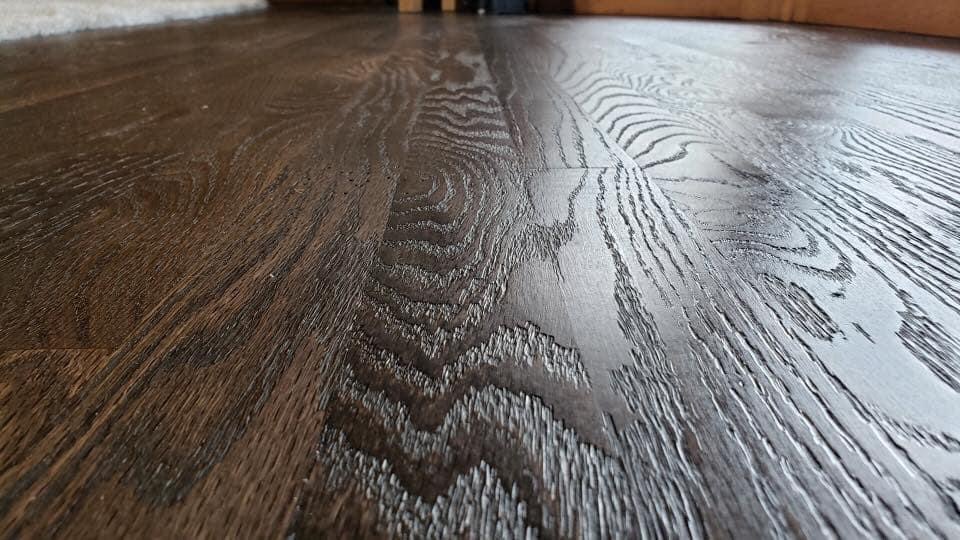
Older hardwood floors deserve a careful look first.
Restoration for floors 50 to 100 years old: waxed, sanded before, loose or gapped. Every job starts with a careful in home assessment, because no two old floors were installed the same way.
The $50 is credited toward your job if you go ahead.
New floor, or restoring the one you have?
Two very different jobs. Here's how to tell which page fits your home.
| Floor details | New site finished floor | Restoring an existing floor |
|---|---|---|
| What you have now | No wood floor, or carpet, vinyl or a worn out floor you're replacing | Older hardwood you want to save: 1950s or 60s, waxed, or sanded before |
| What we do | Install new solid or engineered hardwood, then sand and finish it in your home | Measure what's left, fix what's loose, then sand, blend and finish what can be saved |
| Your choices | Species, plank width, color and sheen | Finish options depend on how much wood is left |
| Next step | Book a $50 estimate visit | Book a $50 floor assessment (credited toward the job) |
1 Wood Floors did an excellent job on my wood floor refinishing project. I highly recommend their services. They expertly replaced damaged pieces of wood, replaced (upgraded) base molding, sanded without making a mess and helped me select a water-based finish that is gorgeous!
My transaction with 1 Wood Floors was the easiest and best I have had in a long time. Ed and Megan are very professional. My project was quickly scheduled and completed, and Chris did an excellent job repairing and refinishing the floors. They look beautiful.
This is my second time using 1woodfloors. Highly recommend. They do beautiful work, very professional, great communication from start to finish. Used them to refinish floors and to replace floors both jobs are beautiful.
Why older floors are different
Many homes around Livonia, Farmington and Birmingham have oak floors that are 60 or 70 years old. They've usually been sanded a few times and waxed for years, and some boards have loosened or been patched. Each sanding takes wood off, so the real question is how much is left to work with. We can't answer that from a photo, and we won't guess.
Every older floor has a history
Floors in older homes can be 50 or even 100 years old. They were installed differently than floors today, and many have been sanded several times. After decades, boards are often loose, and a lot of what happened to the floor over the years decides how it will sand and finish. Before we recommend anything, we answer three questions:
- Who sanded and finished it before, and how? A heavy handed sanding, the wrong finish or years of wax all change what we can do.
- Is there enough life left in the floor? Every sanding removes wood. Some floors have plenty left, some have very little.
- How much wear layer remains? We measure what's left above the tongue on solid floors, or above the core on engineered floors, before a sander ever touches it.
Engineered floors too. We sand engineered floors whoever installed them, including the ones we sell. Wear layers vary a lot from brand to brand, and some are too thin to sand. We measure first, and if a floor can't take it, we'll tell you plainly and walk you through the options.
What can go wrong when nobody checks first
Most of the problems we fix on older floors didn't start with the floor. They started with a company that didn't check it first.
Sanding starts and there isn't enough wood. A floor needs at least 2 millimeters of wood above the tongue to even attempt a sanding. Floors sanded several times often don't have it. Find that out halfway through, and you're left with exposed nails, tongues showing through, or a floor that has to be replaced.
A surprise finish switch. A thin floor limits your options. You may be stuck with a hardwax oil instead of a commercial grade waterborne finish.
Weeks of odor. Some basic restorations still use old fashioned oil based finish. It works, but the solvent (VOC) odor can linger in your home for up to 30 days, and the downtime is much longer.
Gaps filled the wrong way. Older floors are often gapped. Whether to fill them depends on how the floor moves through the seasons, and filler in the wrong floor cracks and pops out.
We'd rather tell you all of this before we start than after.
What we check at the assessment
- Remaining wood above the tongue, which tells us how much sanding life is left.
- Wax and old finish layers.
- Loose, cupped or damaged boards.
- Pet and water stains, and whether they go through the board.
- Past repairs and patches.
- Transitions, stairs, and where the wood runs into other rooms.
- How the floor moves and gaps through the seasons.
- Which finishes the remaining wood can take.
Why the assessment costs $50
Think of it as a consultation and knowledge fee. Every older floor was installed differently, and years of restorations have taught us what to look for. At the visit we measure how much wood is left, check what finish and wax are on it, look at how the floor moves and where it's loose or gapped, and tell you honestly which finishes it can take. The $50 is credited toward your job if you go ahead.
Restoring an old floor is an art
Bringing back the natural beauty of an older floor takes more than modern equipment. Our planetary sanders are built to sand a floor perfectly flat, and many older floors aren't flat, because houses settle and structures shift over decades. Sanding those floors dead flat can take too much wood in spots. So we blend equipment: modern planetary sanders where they belong, and older style machines where the floor needs to be followed rather than flattened. We inspect as we go and check the wear layer throughout, especially when we're blending new boards into an old floor or adding onto one.
Wax changes the plan
Wax soaks into old wood and gums up sandpaper, and any left behind keeps a new finish from bonding. That can lead to peeling and fisheyes. Removing it is slower, careful work, and it's one reason we need to see the floor before we can tell you what the job involves.
Not the cheapest. The right company for an old floor.
A lot of expert analysis goes into restoring an older floor, and much of the industry skips it. Some people just want the lowest price, and that's not us. If you want your floor done once and done right, start with the assessment.
What happens after
You get a plain English plan: what can be saved, what boards need replacing, how much sanding your floor can take, and which finish suits it. If the floor can't safely take another sanding, we'll tell you and walk you through the options. The $50 is credited toward the work if you go ahead. If replacing the floor is the better answer, see our new site finished floors.
Common Questions
Frequently Asked Questions
An older floor needs a real look: measuring how much wood is left, testing for wax, checking boards and how the floor moves. Think of the $50 as a consultation and knowledge fee. It's credited toward your job if you go ahead.
Not honestly. Remaining sanding life, wax and loose boards don't show up in pictures, and on older floors they decide what the job is.
Usually, yes. It takes extra steps to get the wax out so the new finish bonds. We'll test it at the assessment.
We measure it. If there isn't enough wood left for a full sanding, we'll explain your options, including replacing sections, rather than sanding through it.
Yes. We resecure loose boards and weave in matching replacements where boards are stained or broken.
Yes. Some stains sand out, and deeper ones need board replacement. We'll show you which is which.
We measure it at the assessment. A floor needs at least 2 millimeters above the tongue to even attempt a sanding.
We can on some basic restorations, but the odor can linger for up to 30 days and the downtime is much longer. We'll walk you through the tradeoffs first.
Your floor has a lot of history. Let's see what it has left.
The $50 is credited toward your job.
Proudly serving Livonia and nearby
Book a $50 floor assessment.
We'll call to arrange the visit and the $50, which is credited toward your job.