
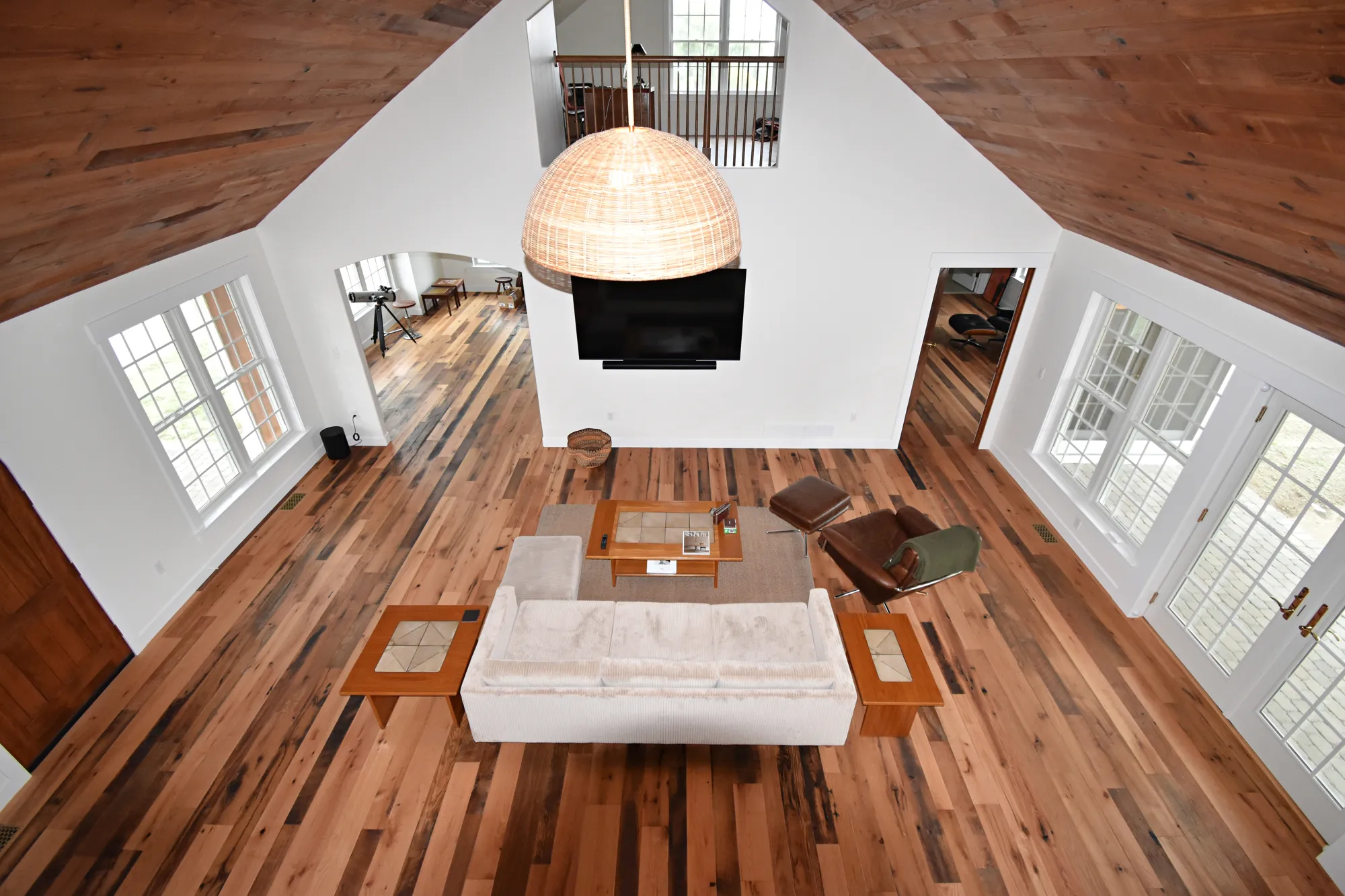
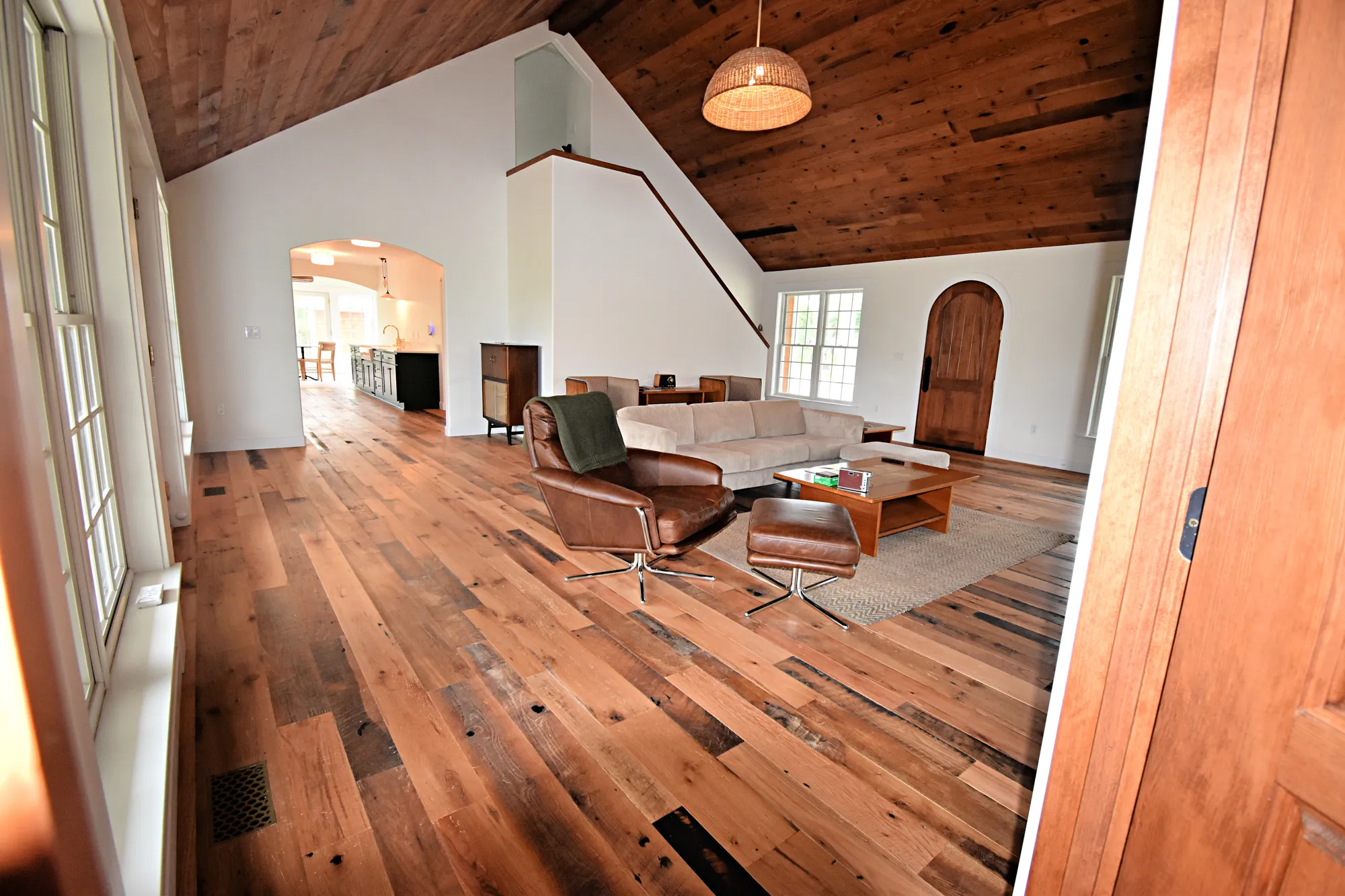
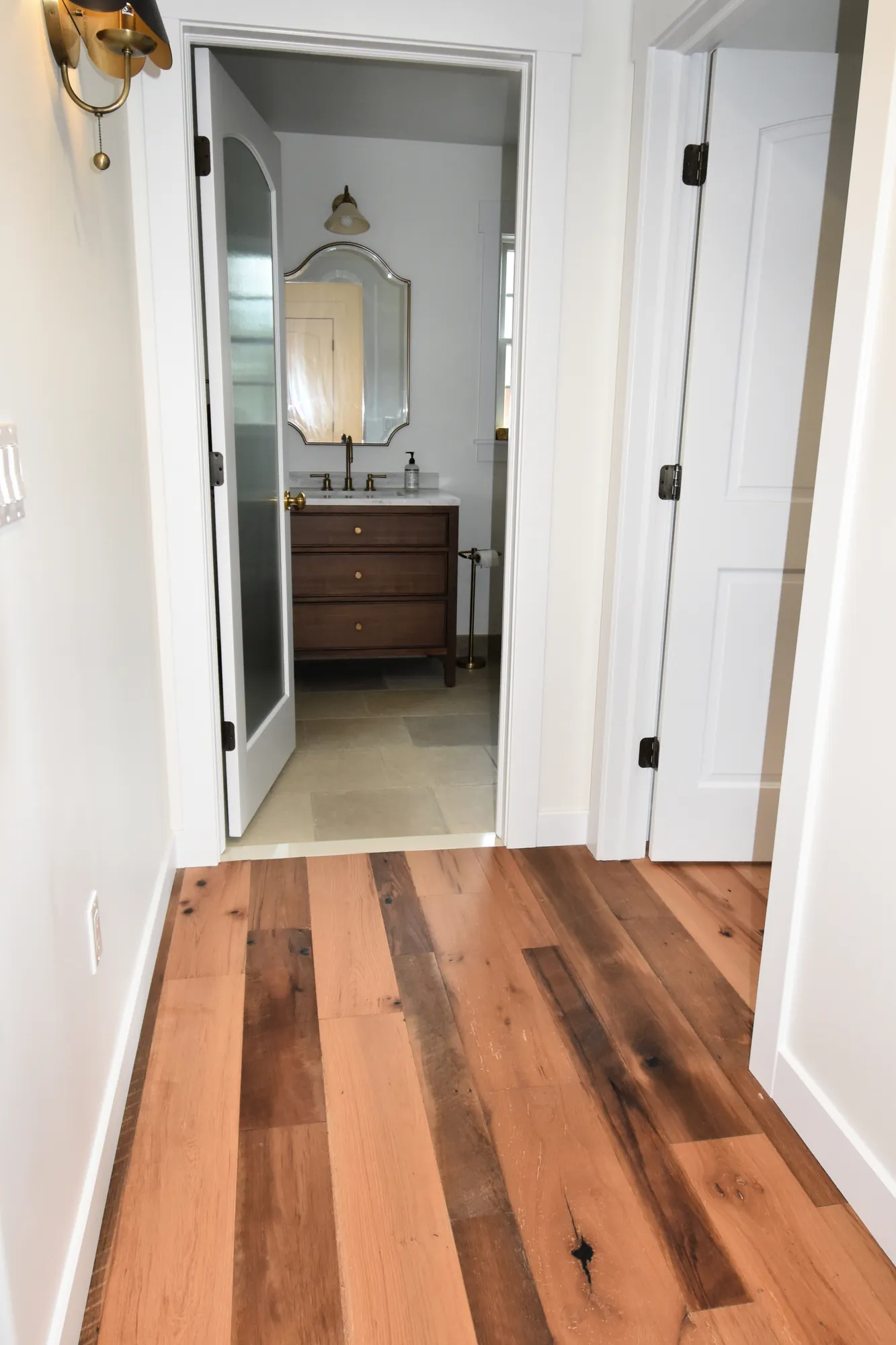
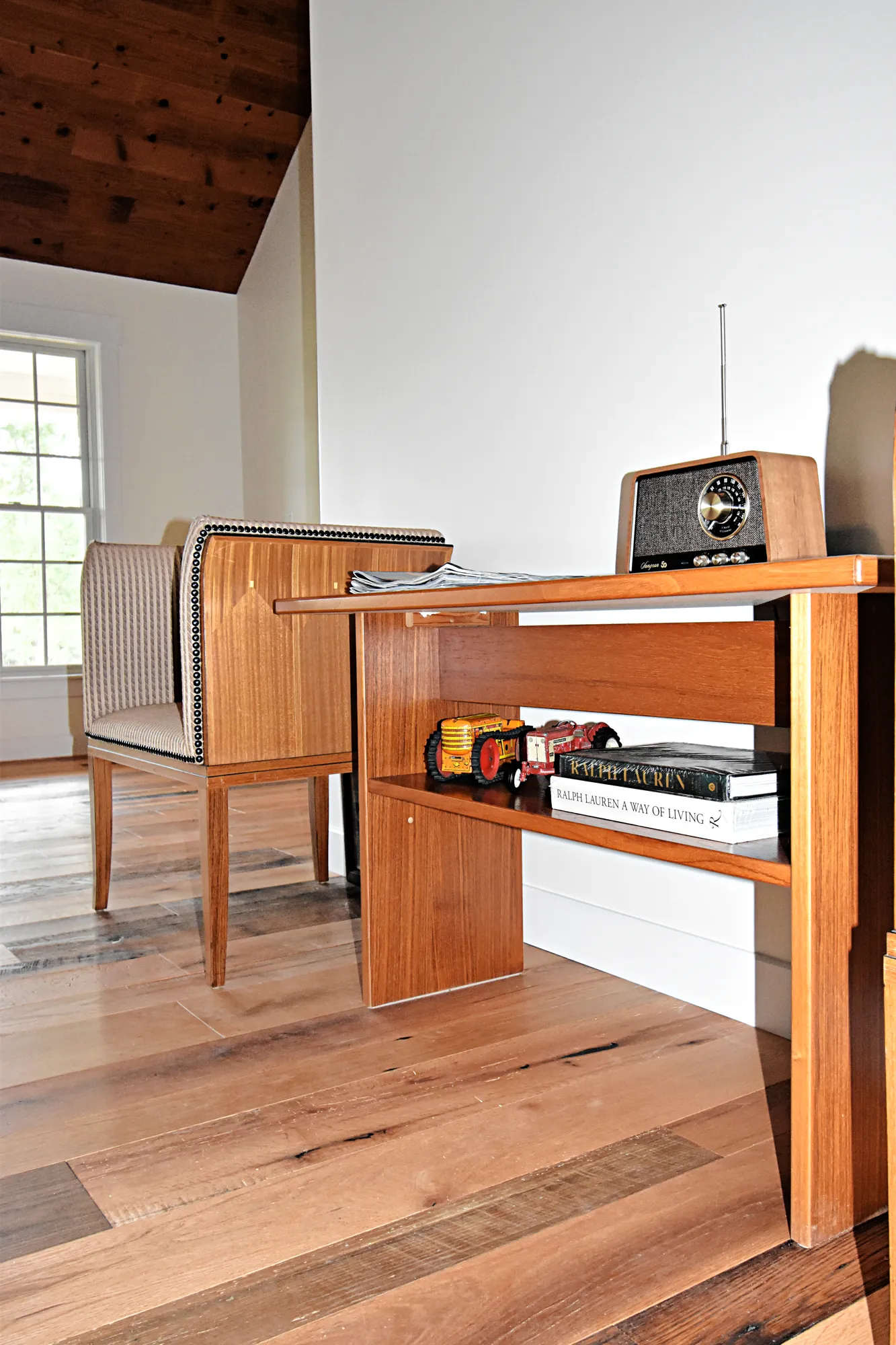
- Floor
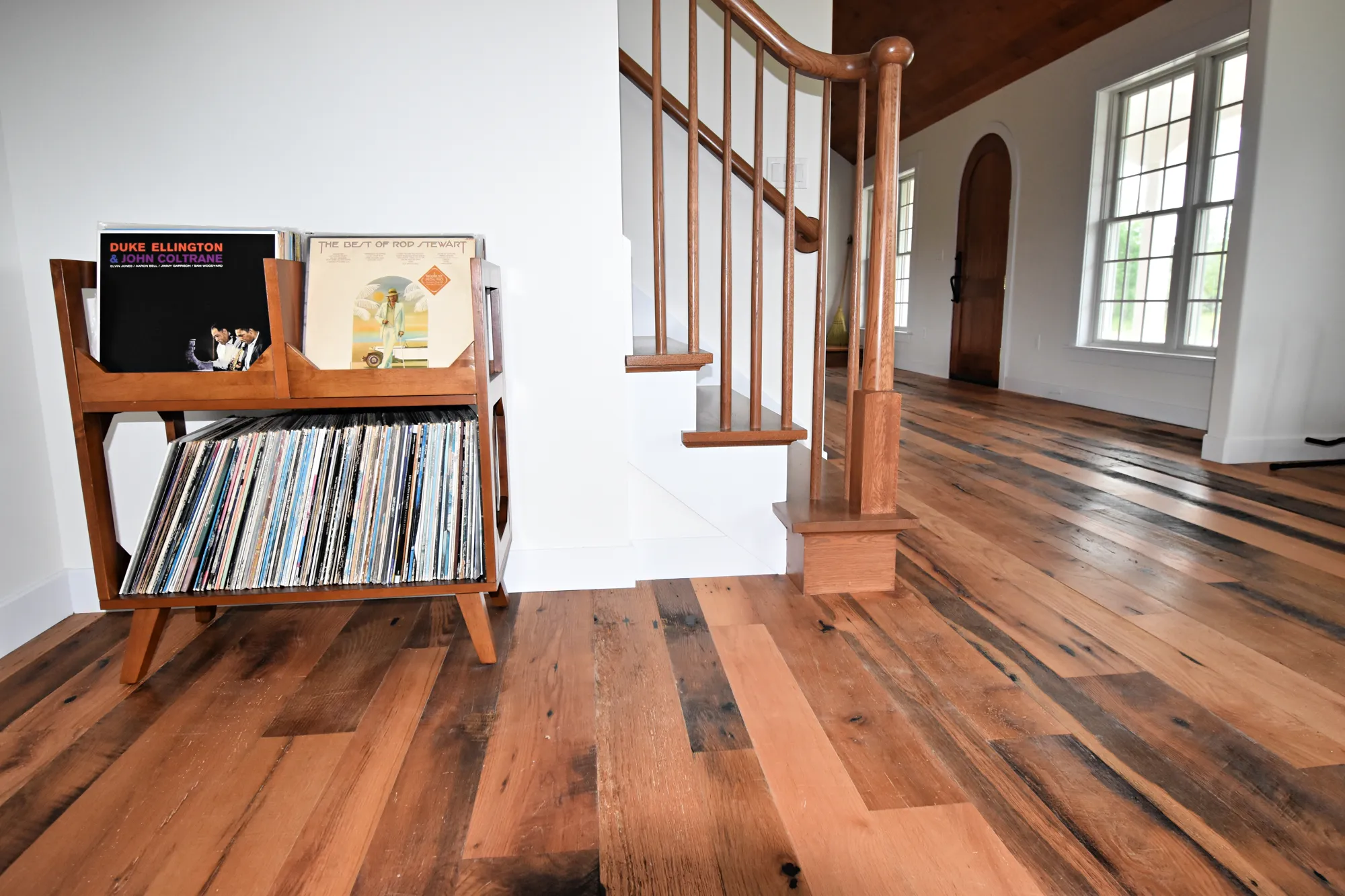
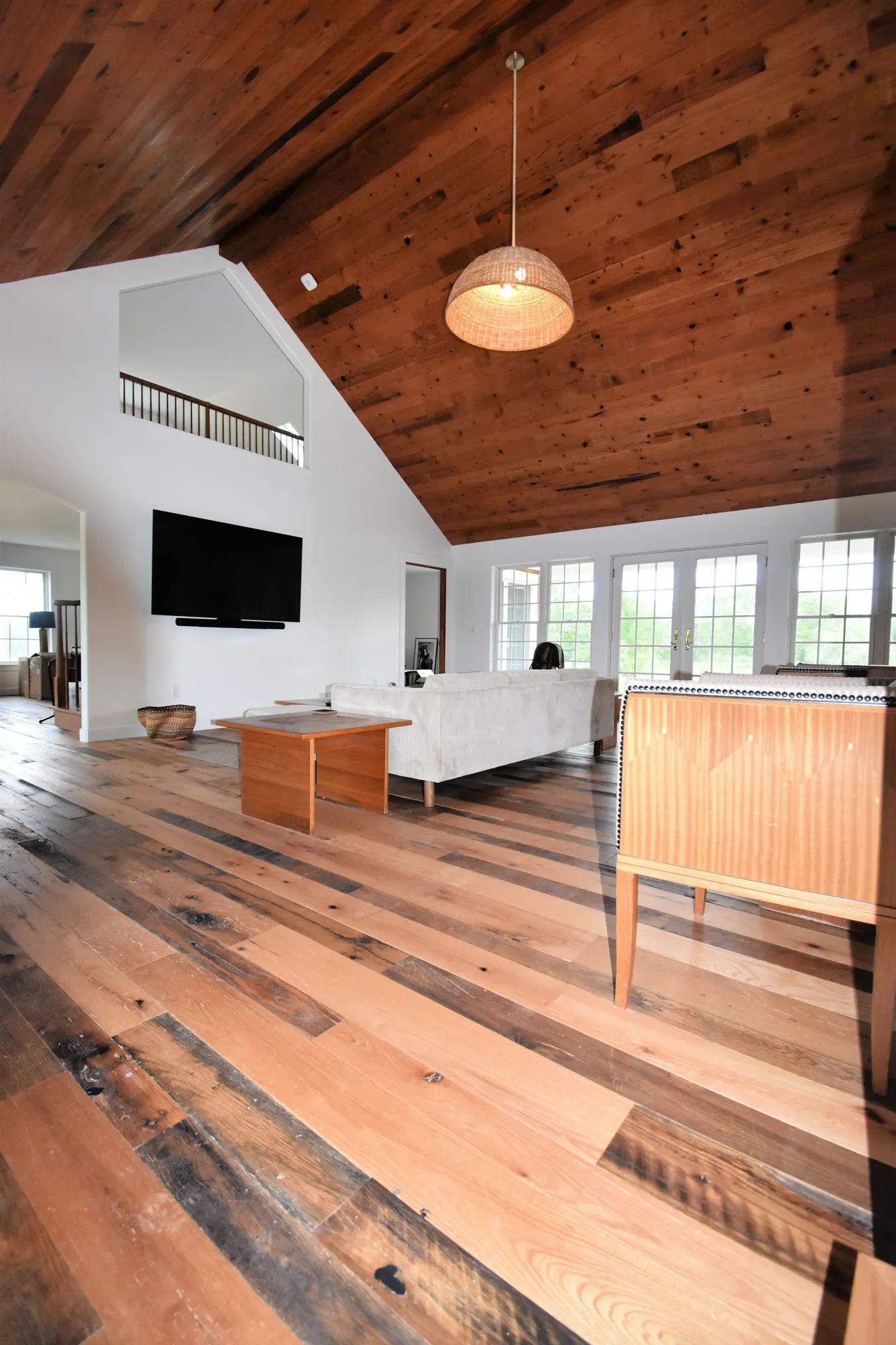
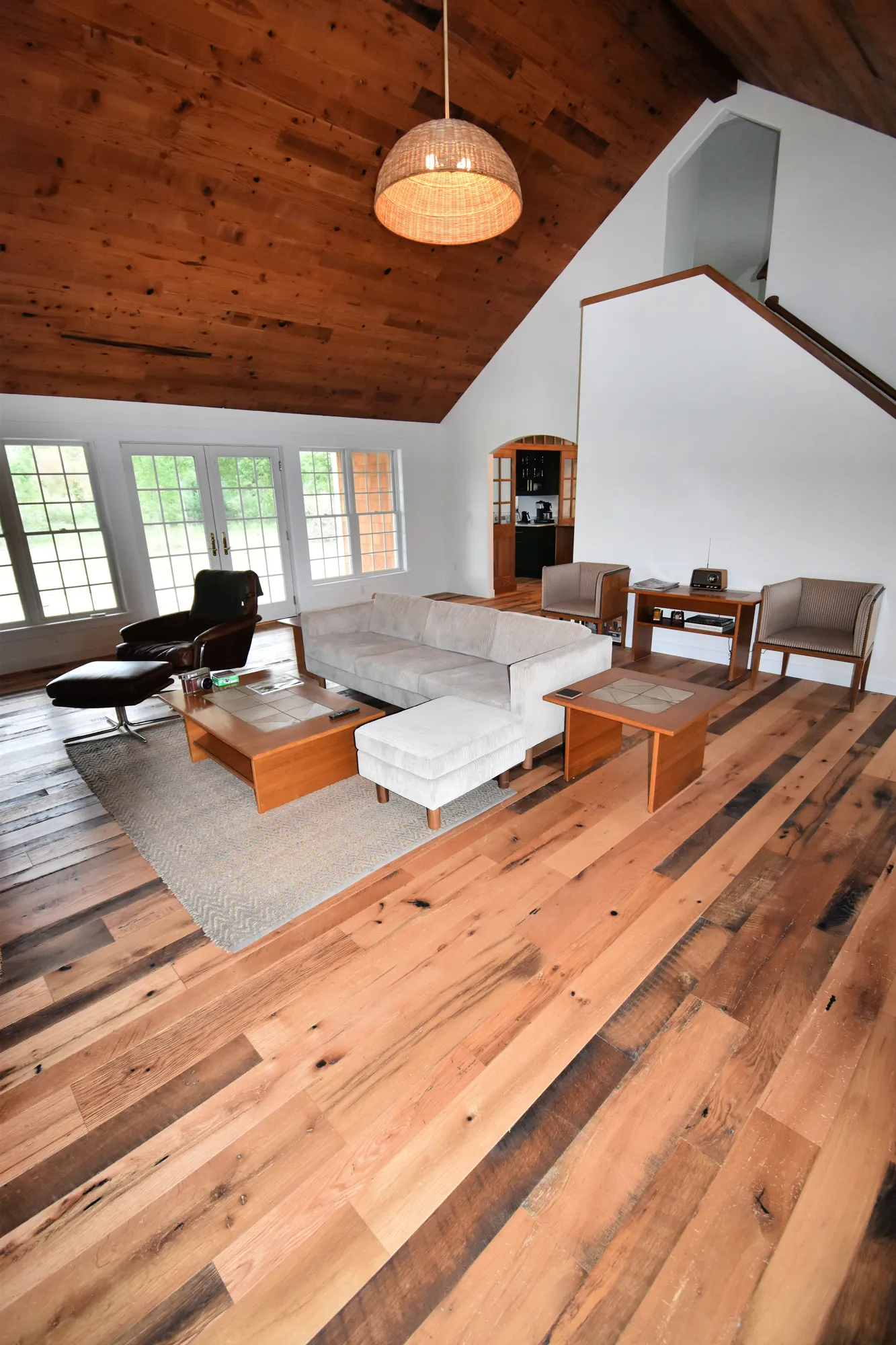
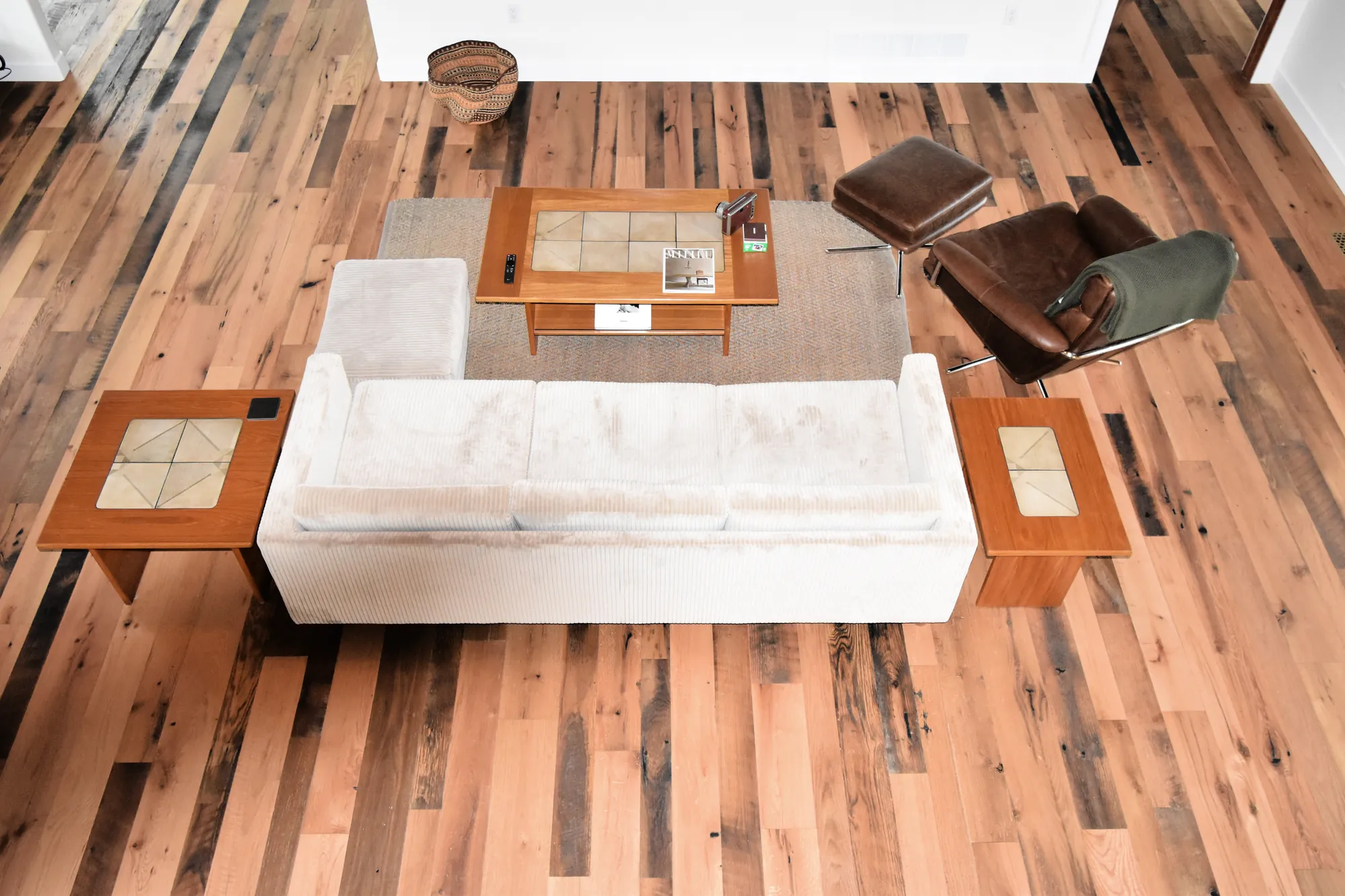
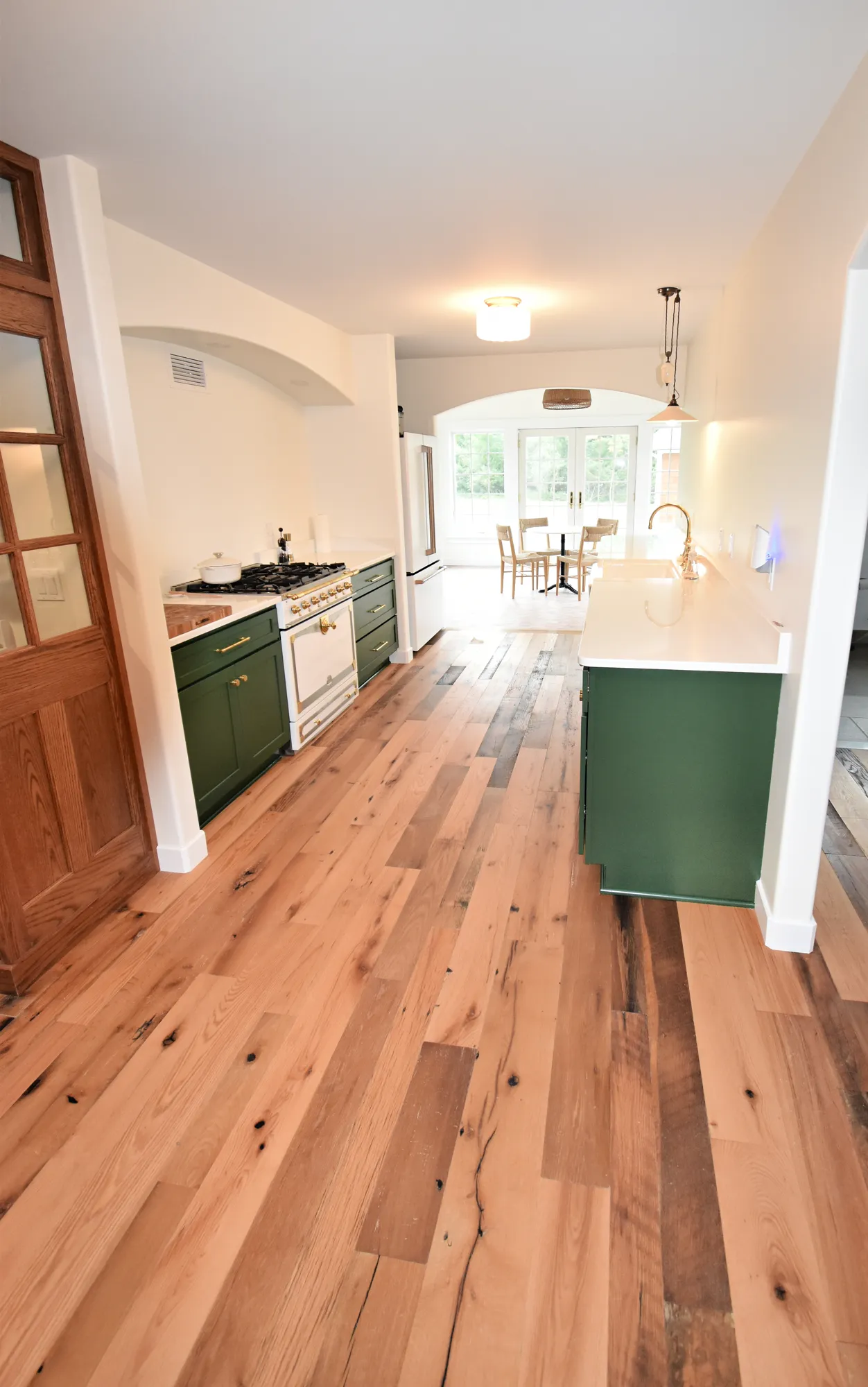
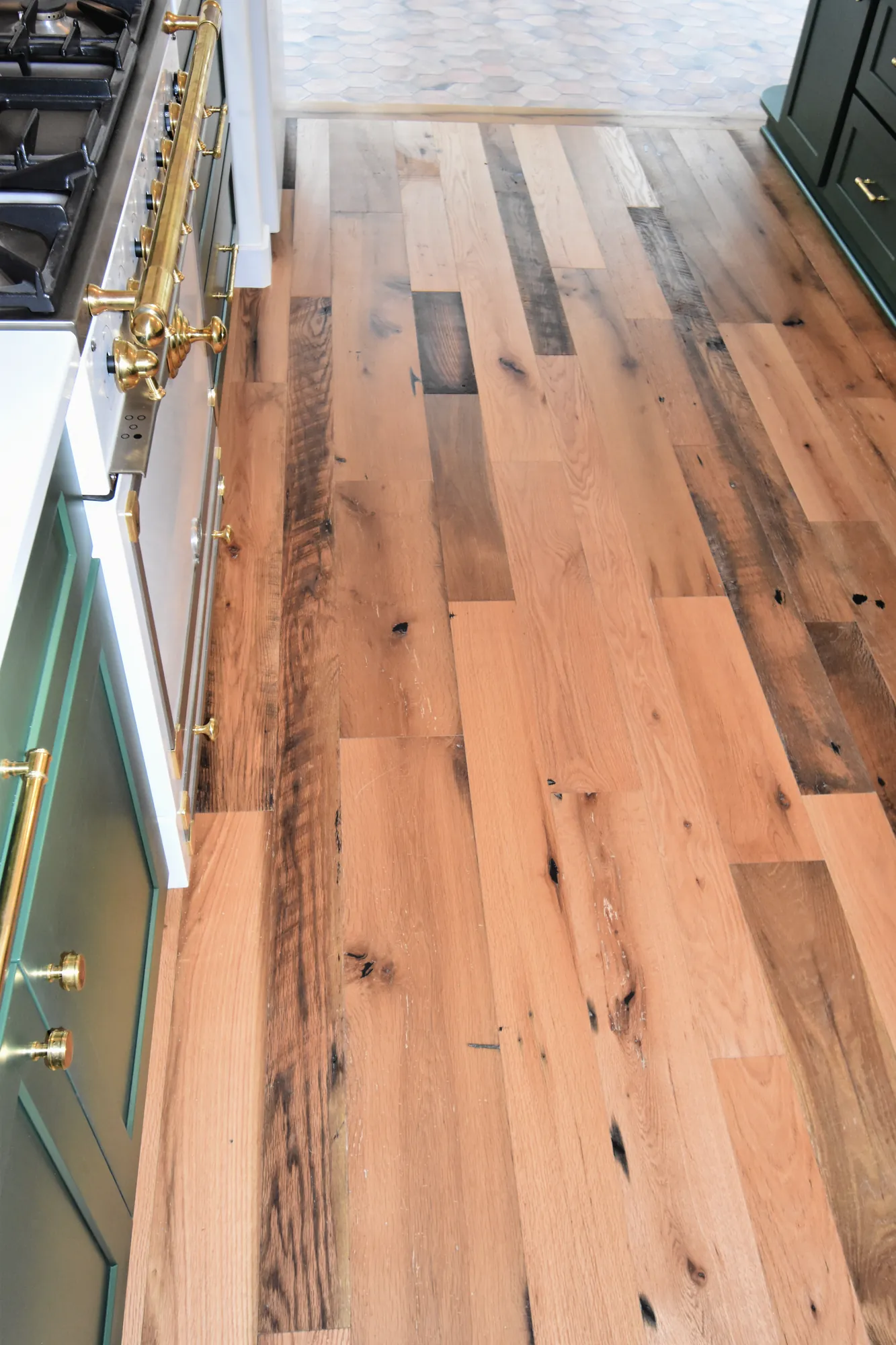
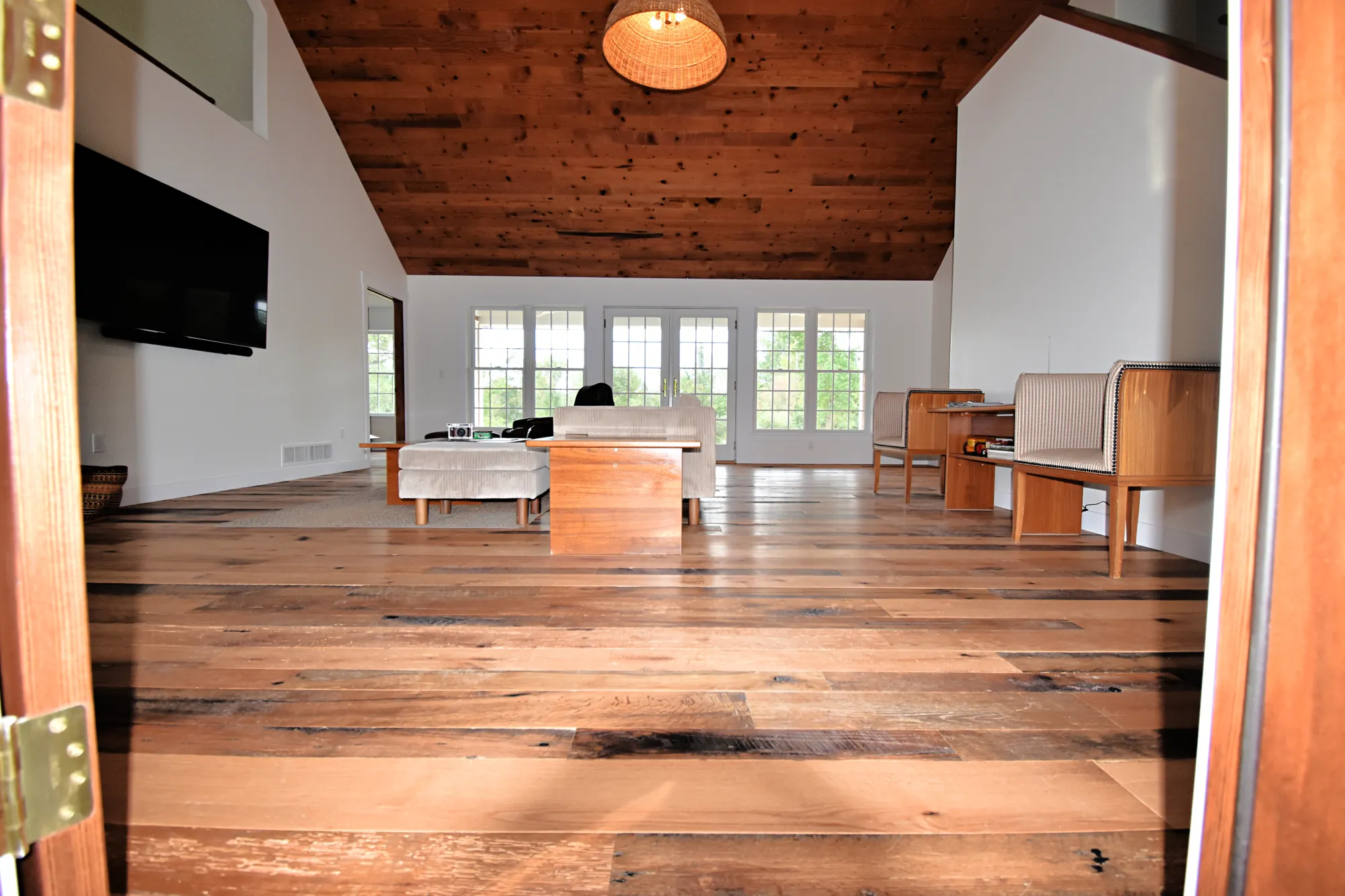
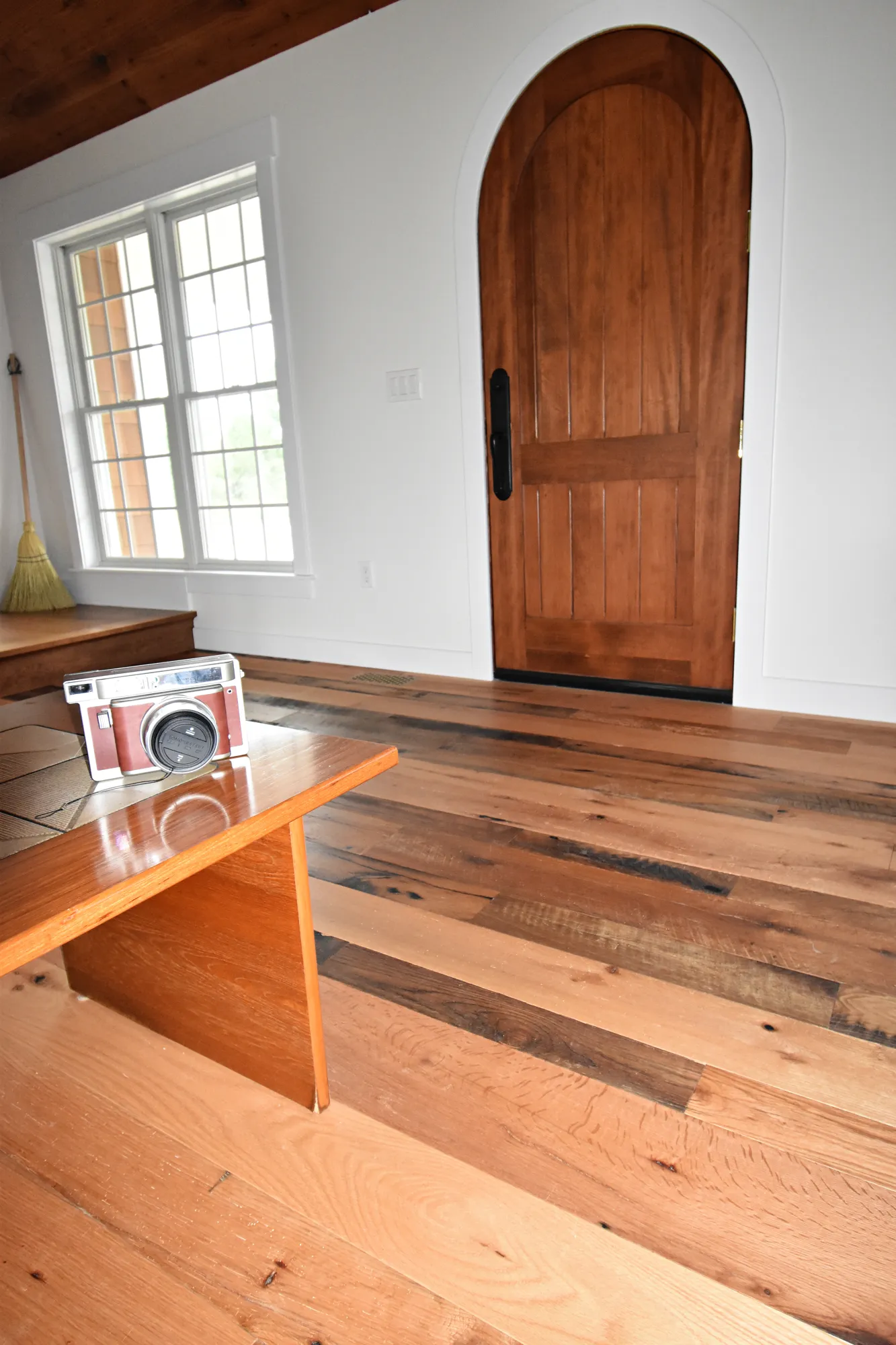
- Reclaimed hit skip oak
- Finish
- Factory finished, oil based
- Install
- Glue assisted over a Bona R540 vapor barrier
- Ceiling
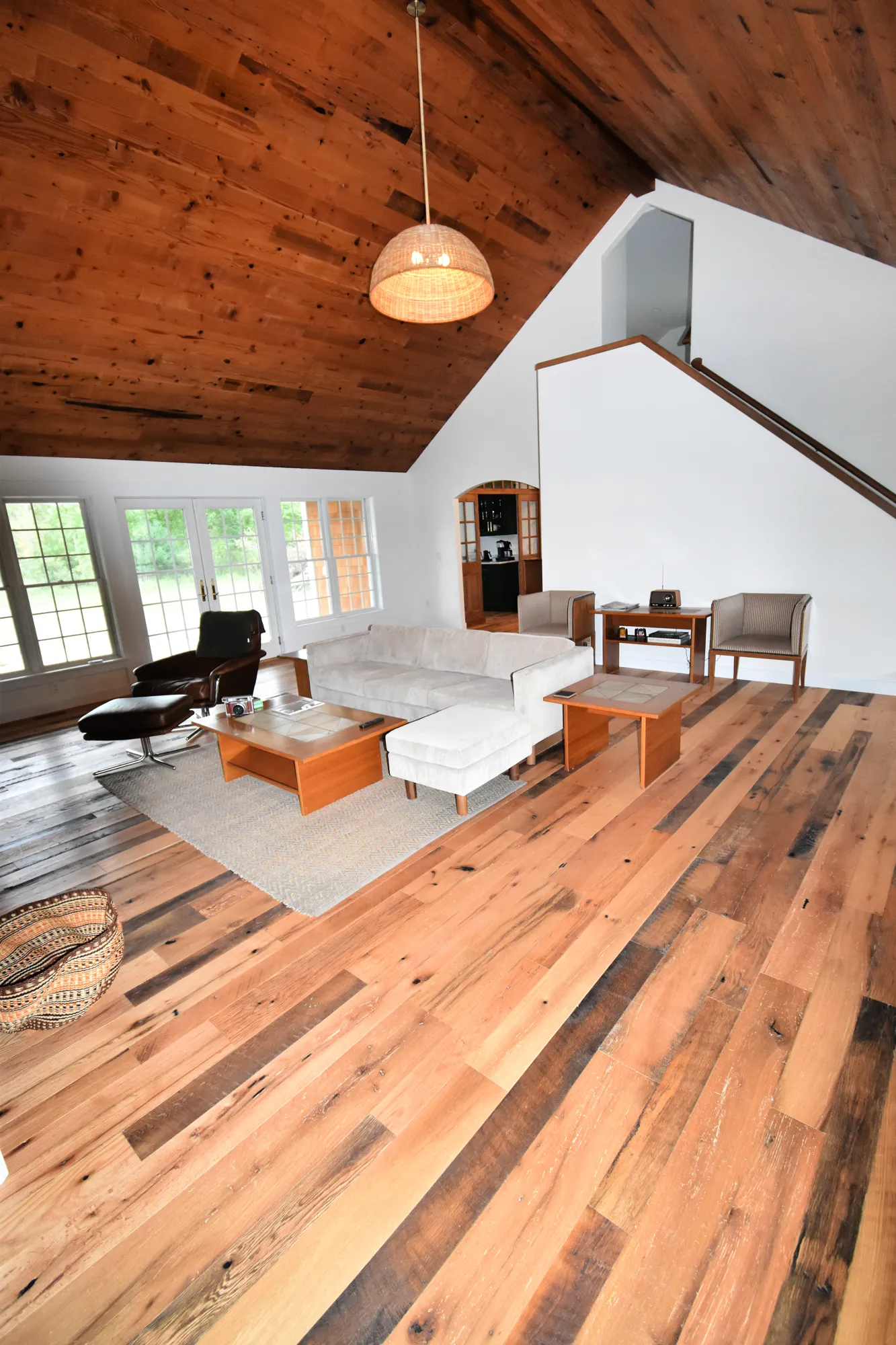
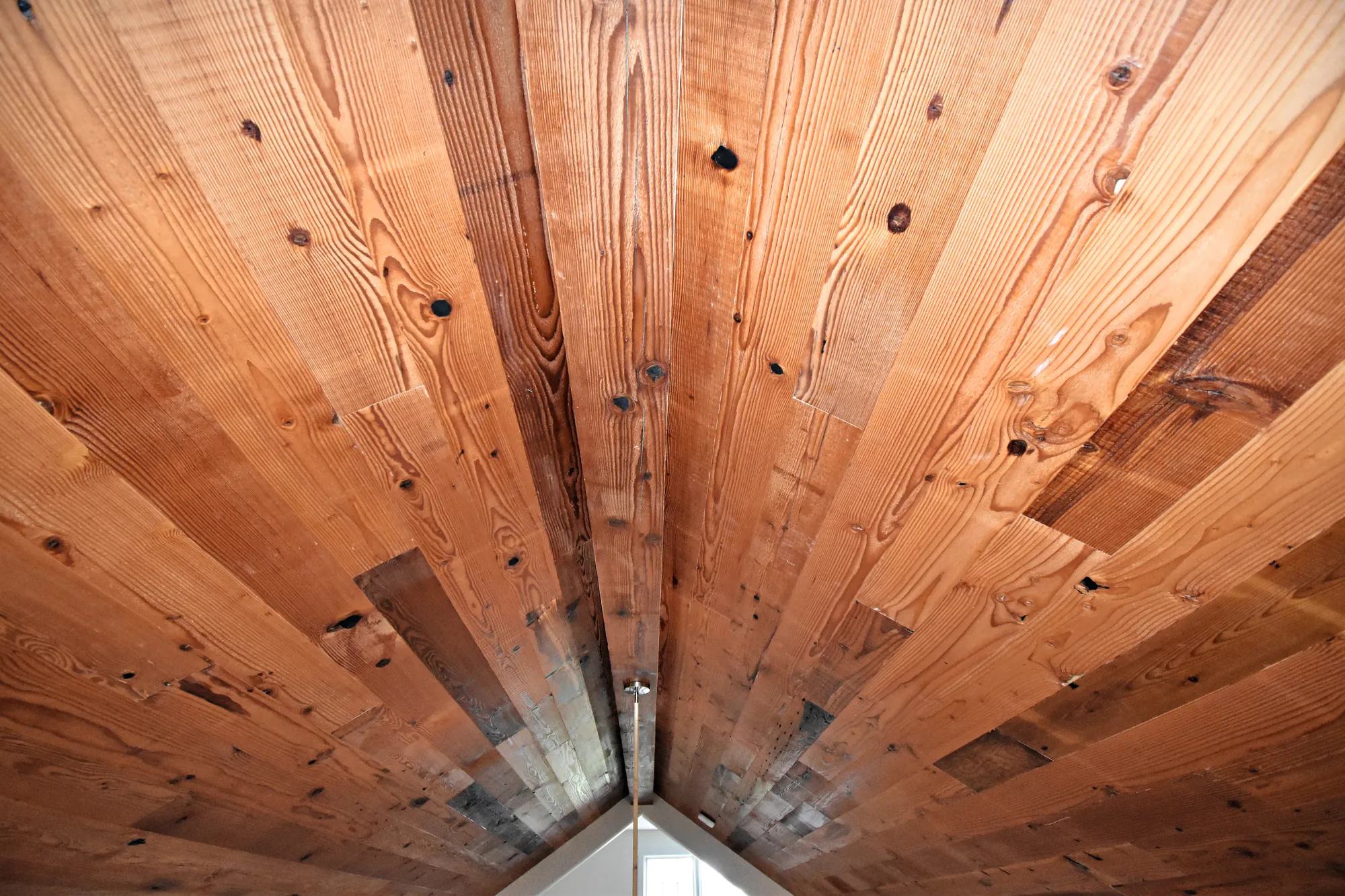
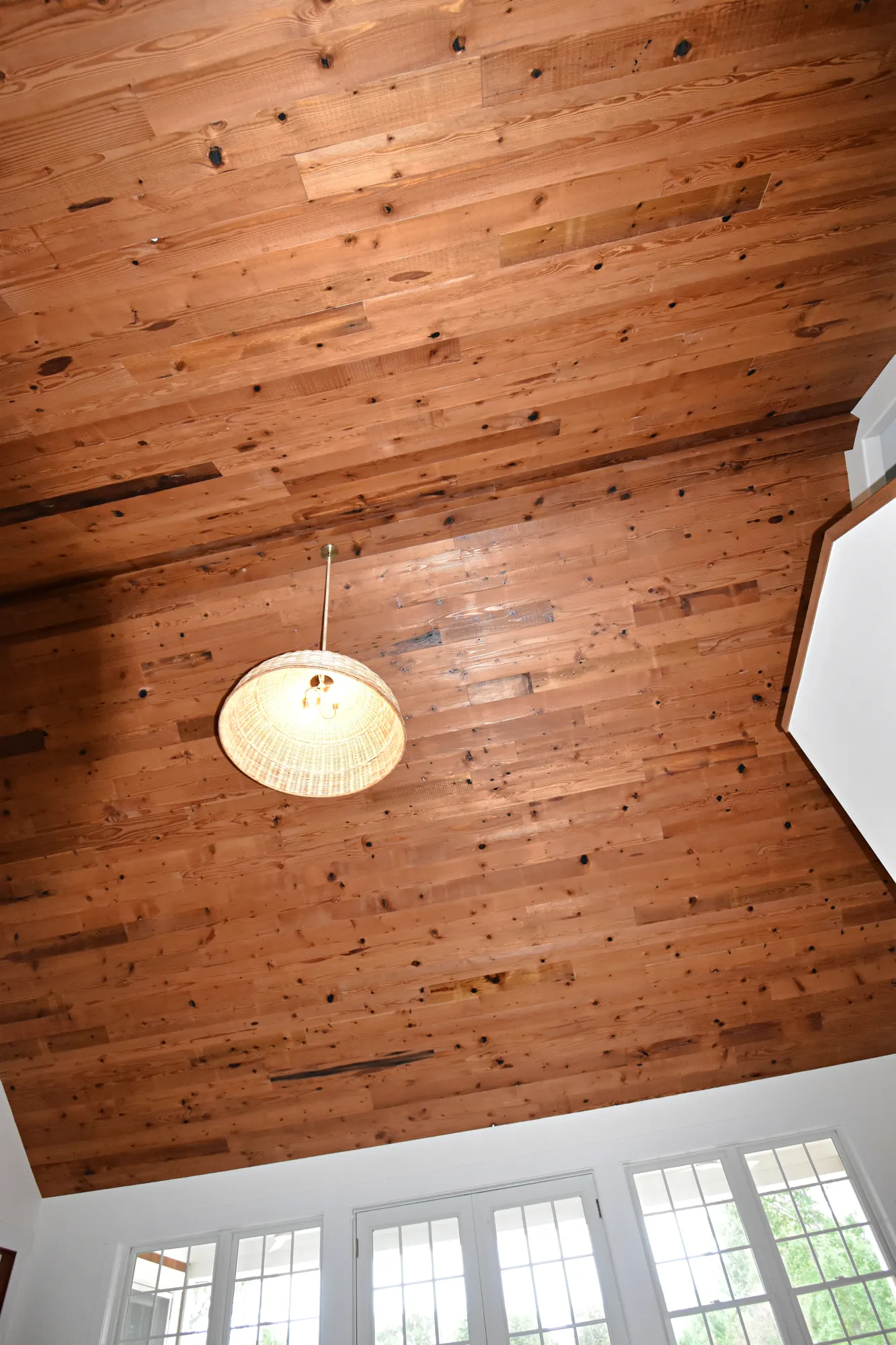
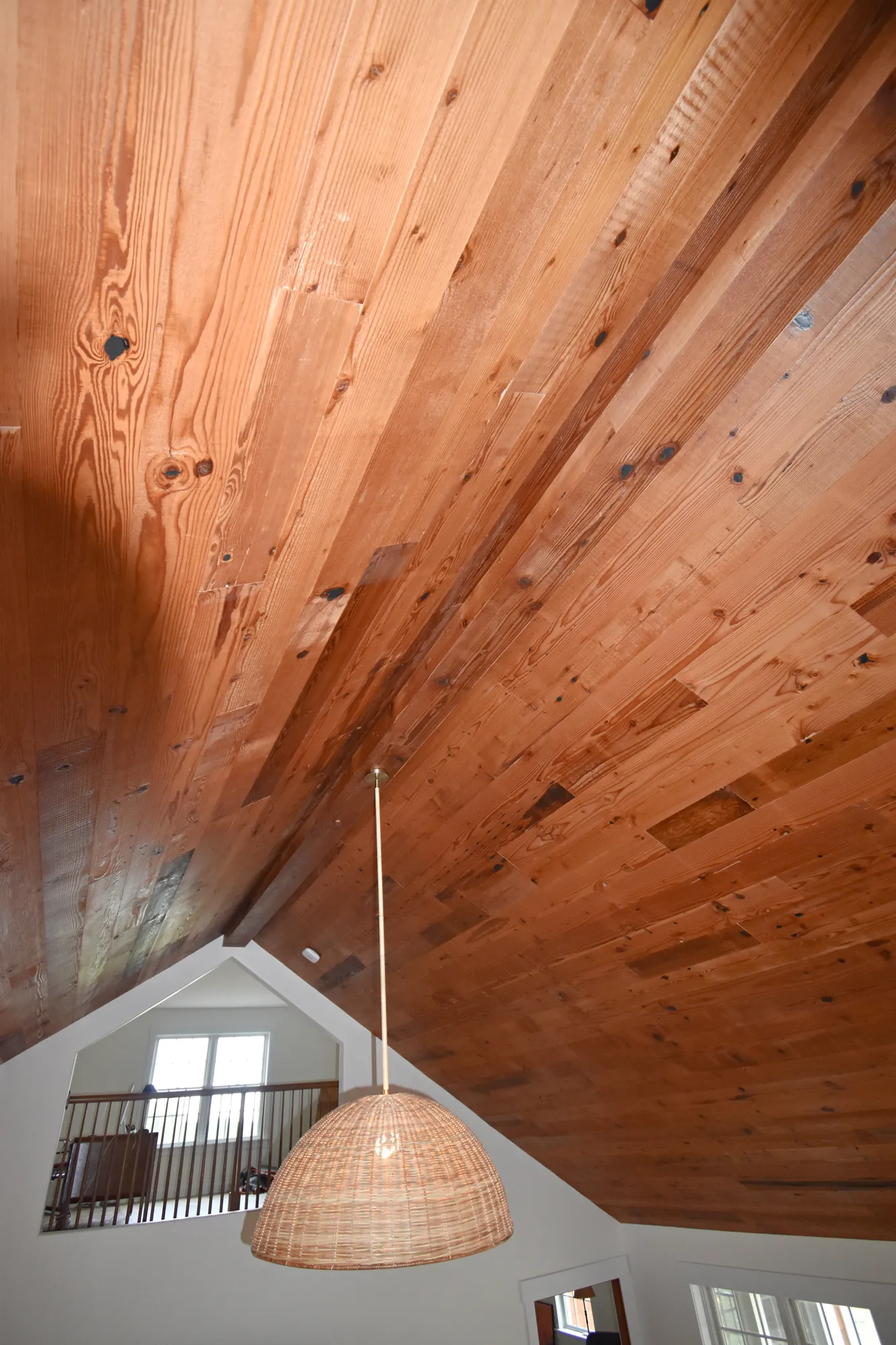
- Reclaimed, thermally modified Douglas fir
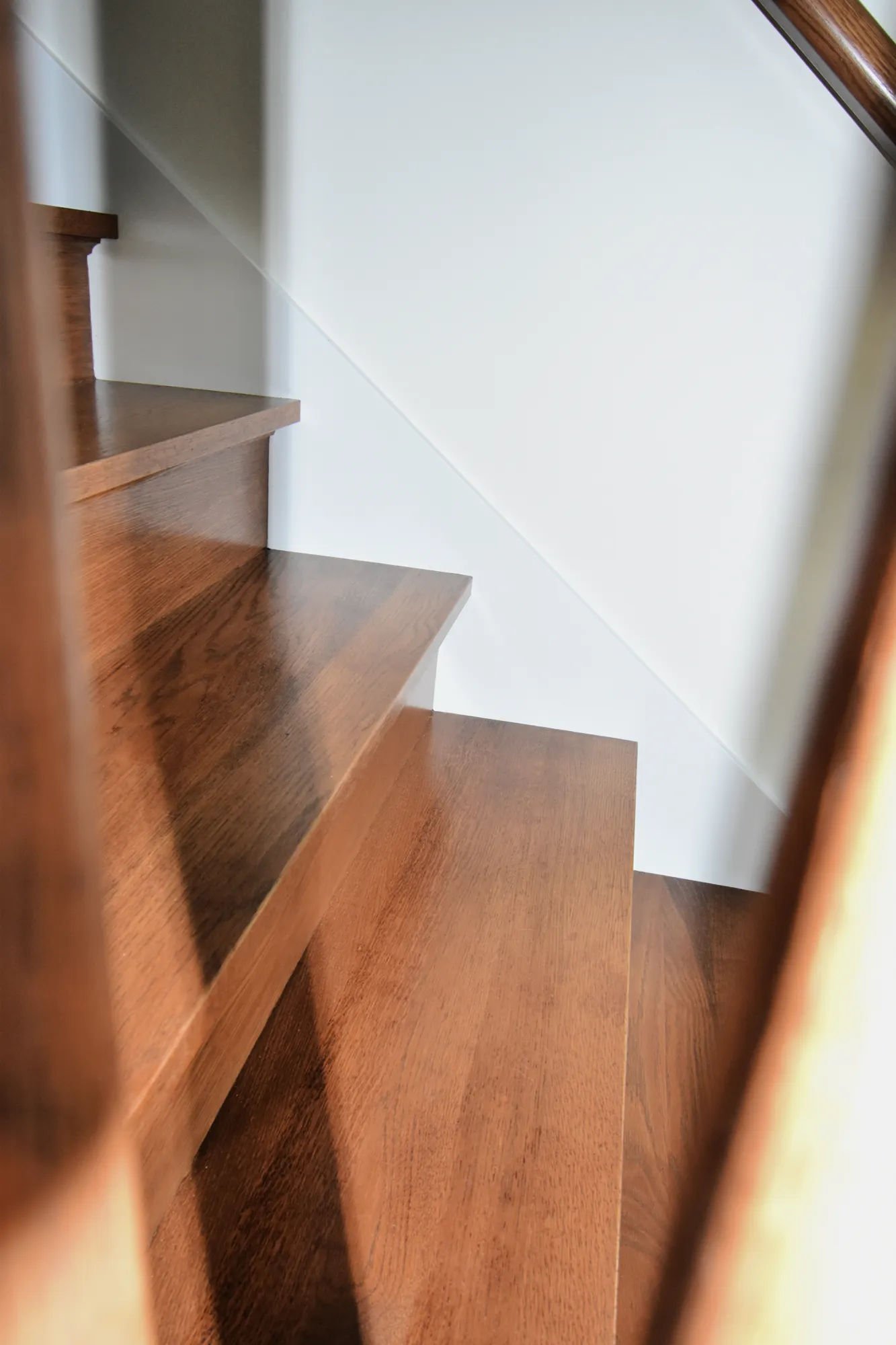
- Stairs
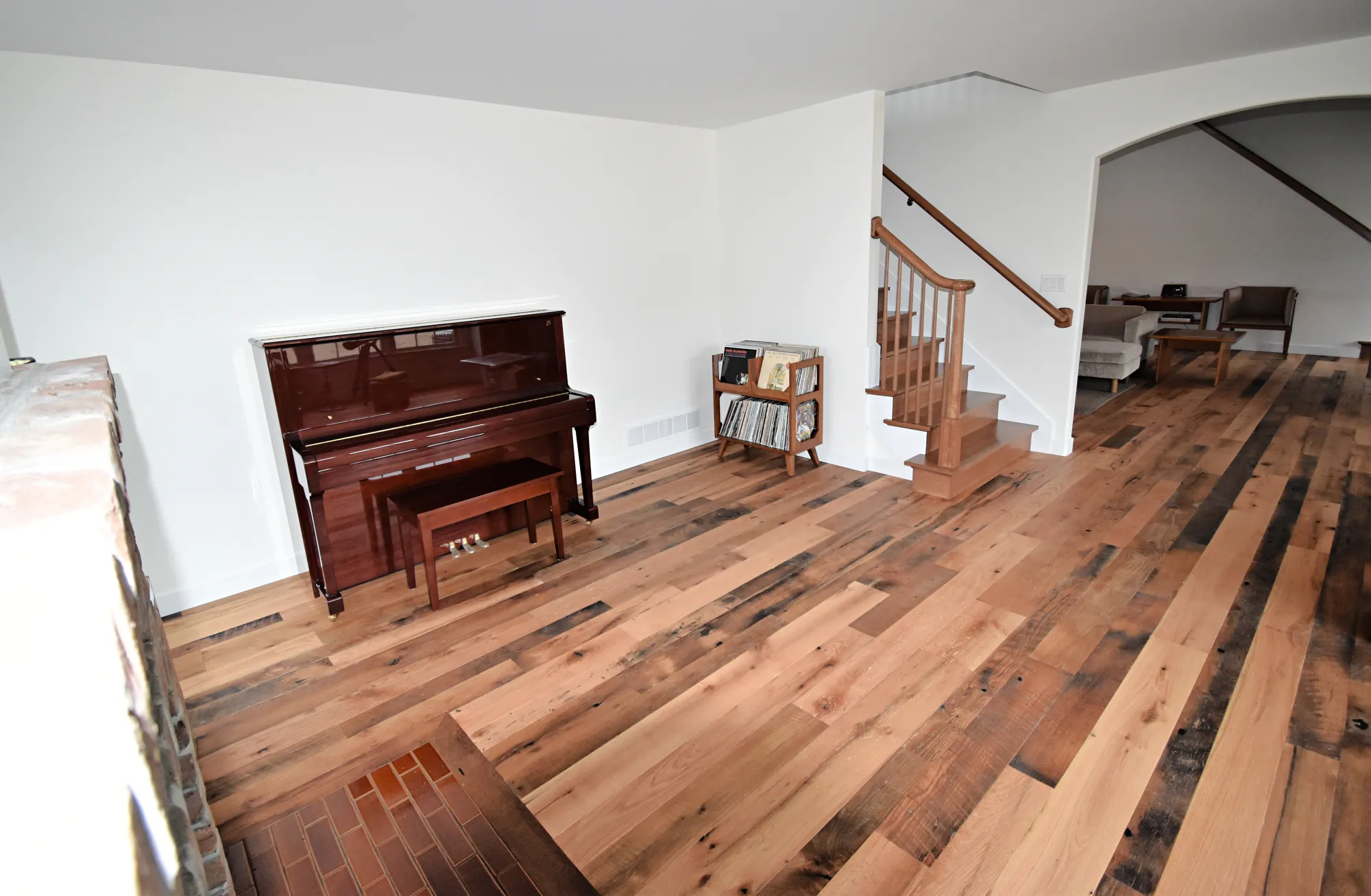
- White oak
The Project
This Lexington home called for wood with a past. The owners wanted floors and a ceiling that look like they have always belonged to the house, with warmth and character in every room.
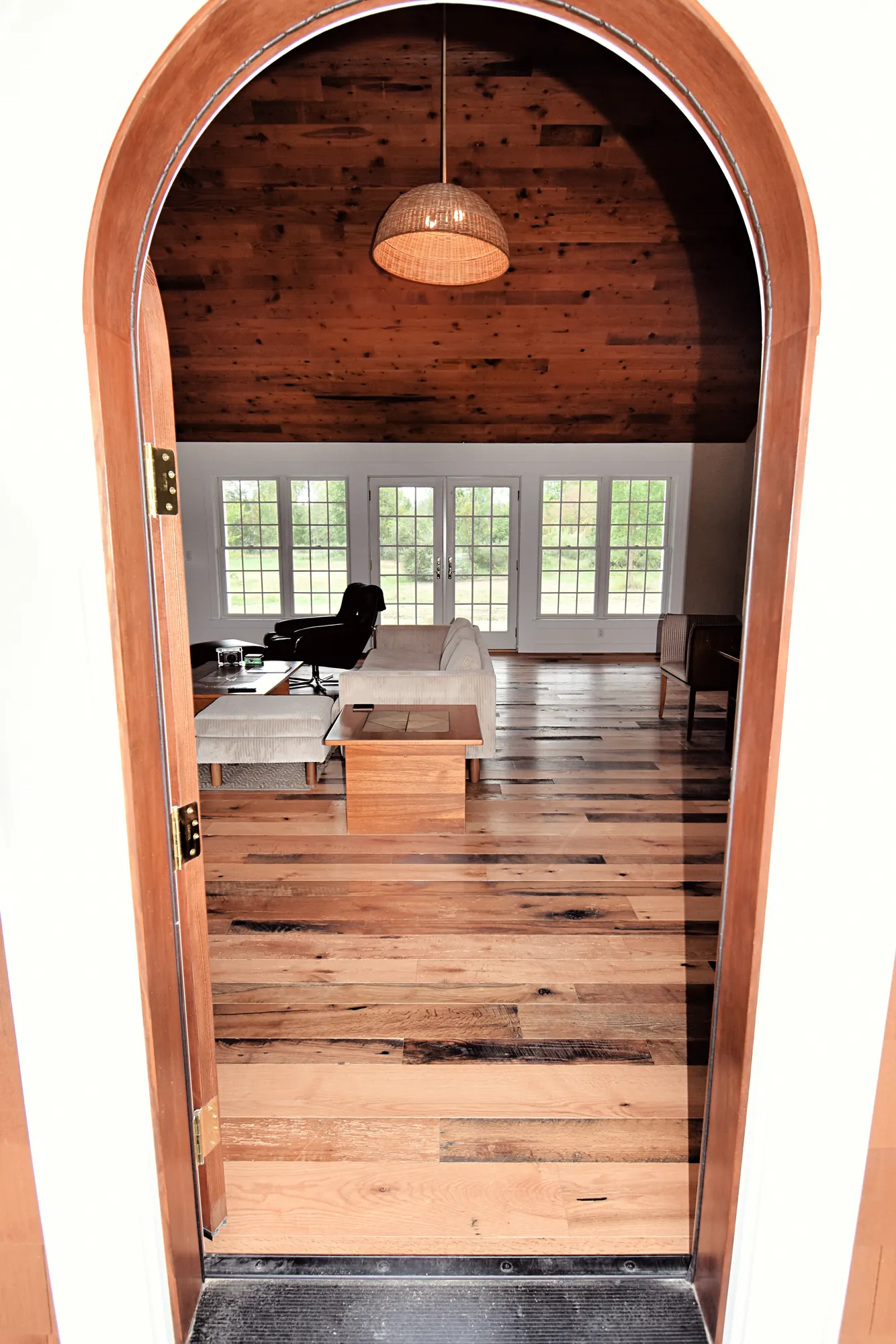
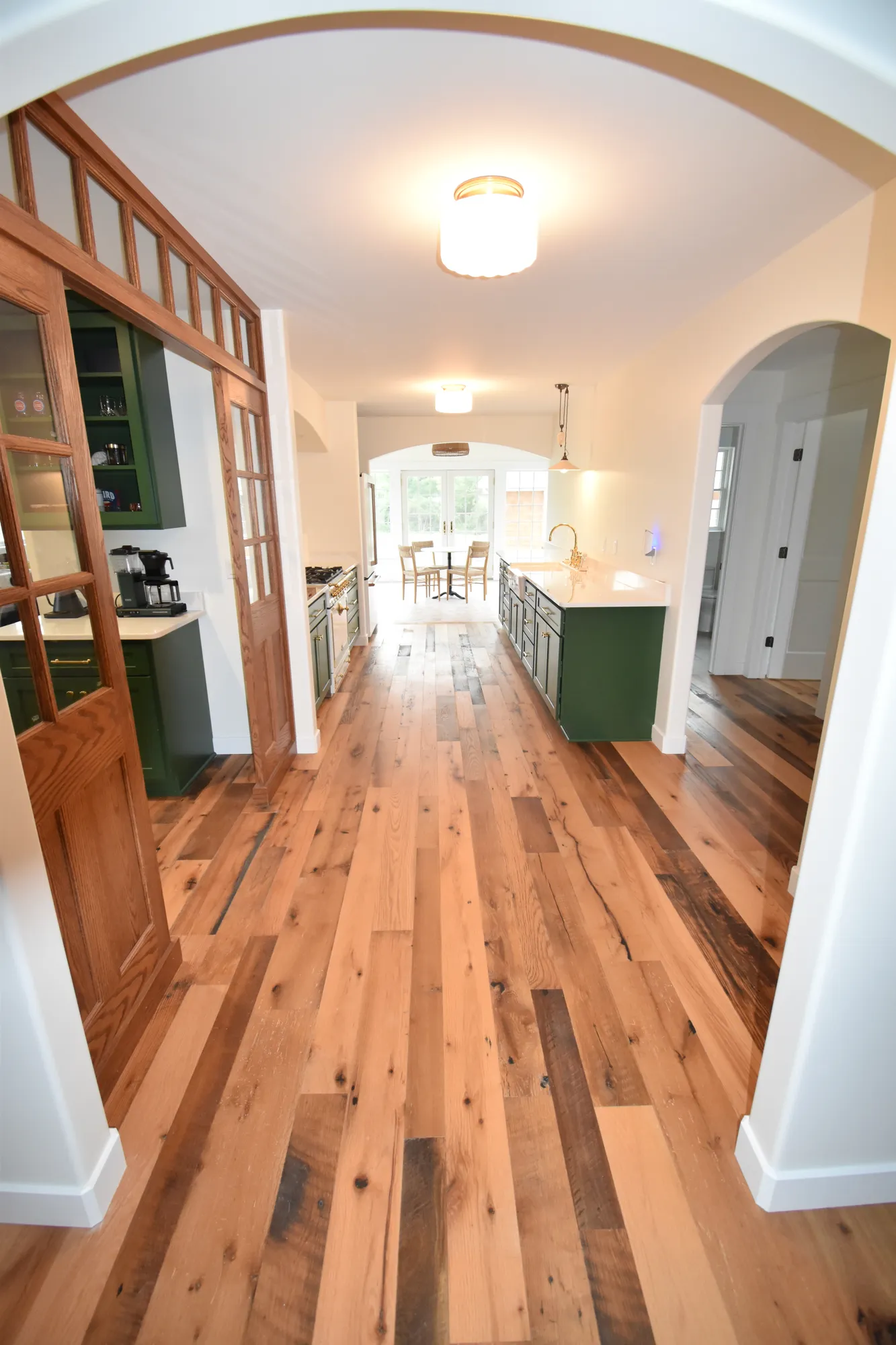
1 Wood Floors specified, supplied and installed the reclaimed hit skip oak floor. We also supplied the reclaimed Douglas fir for the ceiling, thermally modified for stability, and coordinated the white oak stairs that tie the levels together. The result is a home where old wood and clean modern lines sit easily side by side.
The Floor: Reclaimed Hit Skip Oak, Finished in Our Factory
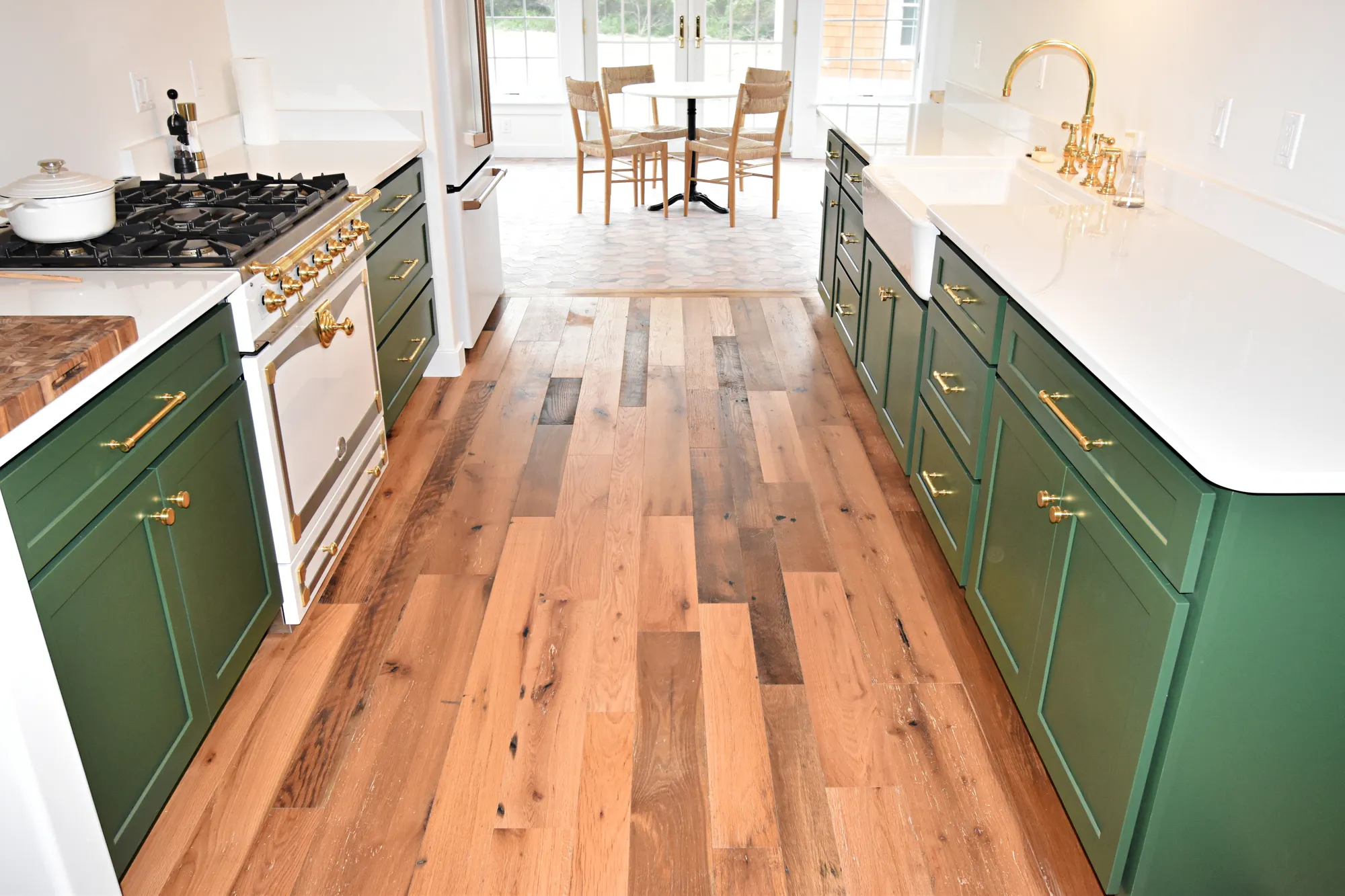
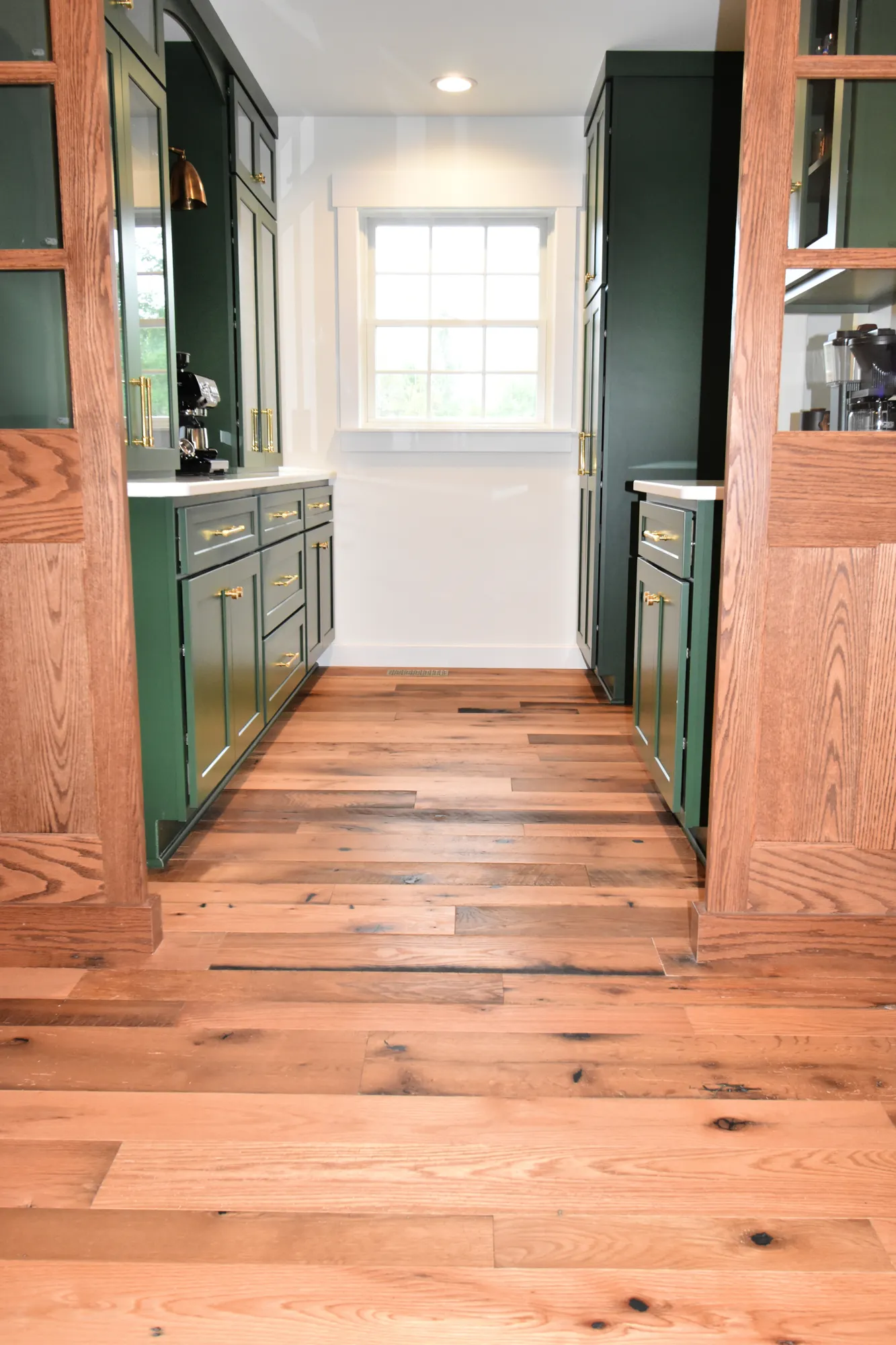
Reclaimed oak carries marks you cannot fake: old saw lines, nail holes, color shifts from decades of use. The goal on this floor was to keep all of that and still give the owners a floor that performs like new.
Here is how the boards were made ready in our factory:
- Kiln dried again. Reclaimed wood has lived through years of changing conditions, so it goes back into the kiln to bring its moisture down before milling.
- Scanned with a metal detector. Old boards can hide nails and bits of metal. Every board is checked before it reaches a blade.
- Milled into tongue and groove. Each board is milled so it locks tightly with its neighbors on the floor.
- Given a hit skip pass. The planer "hits" the high spots and "skips" the low ones. The board becomes flat enough to install, but the original saw marks stay on the face.
- Denibbed and finished. The surface is lightly denibbed, then given an oil based finish in the factory.
Why factory finished? Sanding a floor on site flattens the surface, and that would take away the saw marks that make this floor what it is. Finishing in our factory protects the boards while keeping the texture. That look cannot be achieved by finishing on site.
Installed by 1 Wood Floors. On site, our crew laid the floor over a Bona R540 vapor barrier and used a glue assisted installation. Reclaimed boards each have their own color and marks, so our installers matched them by hand as they went, laying boards so the original saw marks line up across the floor. That hand matching is what makes the room read as one floor rather than a mix of old boards.
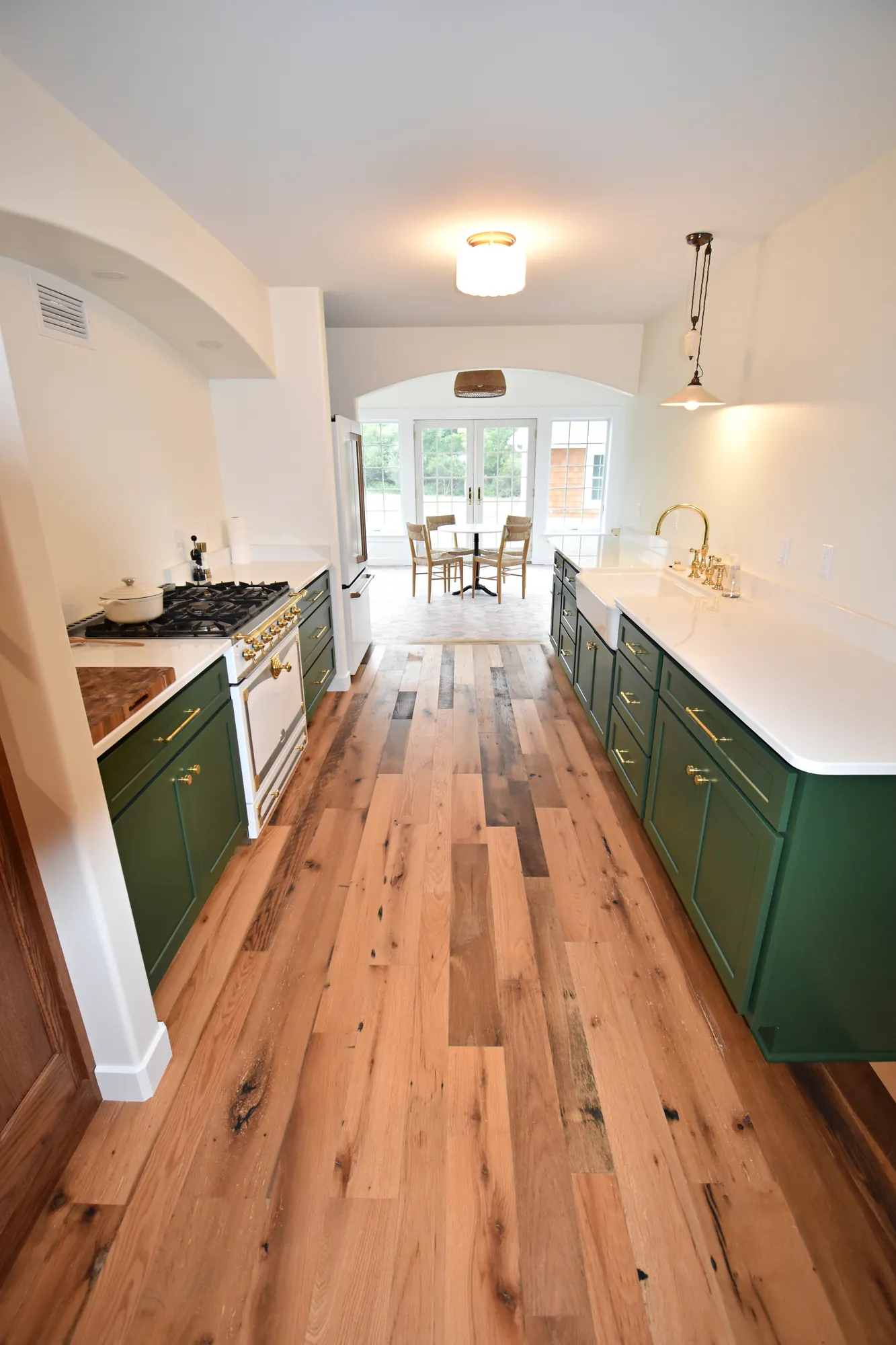
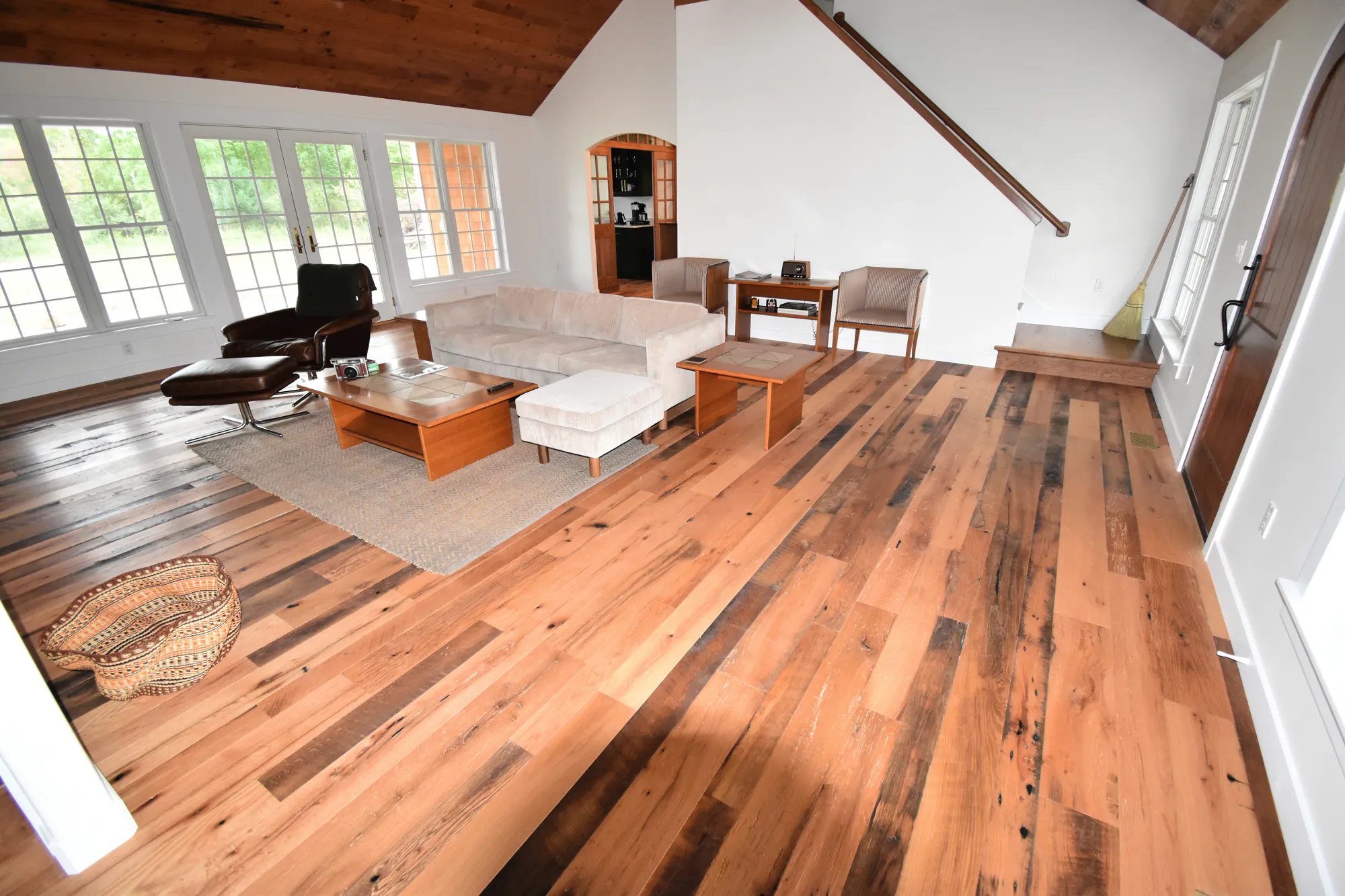
Want to see more of what reclaimed wood can do? Explore our reclaimed barn wood flooring.
The Ceiling: Reclaimed, Thermally Modified Douglas Fir
Overhead, reclaimed Douglas fir gives the great room its warm, grained canopy. 1 Wood Floors supplied the fir, which was thermally modified and finished. The ceiling has square ends and a trimless perimeter: the boards are cut flush where the ceiling meets the walls, so the lines stay clean with no trim to break them up.
Why thermally modified wood on a ceiling? All wood takes on and gives off moisture as the seasons change, and it swells and shrinks as it does. On a ceiling, that movement is easy to see. Boards that shrink can open small gaps that show a line of different color or a break in the finish. Thermally modified wood takes on less moisture, so it moves less. That stability is what lets a trimless, flush cut ceiling like this one stay clean over time.
What Is Thermally Modified Wood?
Thermal modification uses heat, not chemicals, to change how wood behaves.
How it works. The wood is heated in a kiln with very little oxygen, often protected by steam or another inert atmosphere. Commercial processes generally run between about 160 °C and 240 °C (roughly 320 °F to 465 °F), well above the temperatures of normal kiln drying. Oxygen is kept low so the wood is modified rather than burned. A common industrial method dries the wood first, holds it at the modification temperature, then cools it and brings its moisture content back up to a stable level for machining.
What changes inside the wood. The heat breaks down hemicellulose, the part of the cell wall that attracts water most. With less of it, the wood holds less moisture. Research from the USDA Forest Products Laboratory reports that heat treated wood often reaches an equilibrium moisture content around half that of untreated wood.
What that means in a home:
- Lower moisture uptake. The wood absorbs less water from humid air.
- Better dimensional stability. Because it takes on less moisture, it swells and shrinks less from season to season.
- Deeper, richer color. The heat darkens the wood all the way through, not just on the surface, so the tone stays the same if a board is cut or planed.
- No added chemicals. The change comes from heat and steam alone.
Where it fits best. Heat makes wood a bit more brittle and lowers some strength properties, so thermally modified wood is not used for structural, load bearing parts. A ceiling is a natural fit: it carries no load, and it is exactly where stability shows the most.
The Stairs: White Oak
White oak stairs connect the levels of the home and pair cleanly with the reclaimed floor. 1 Wood Floors coordinated the stair build and finish, so the treads, the floor and the rest of the home come together as one plan.
Planning stairs of your own? See our staircase renovations.
Questions About This Project
Hit skip describes how the boards are planed. The planer hits the high spots and skips the low ones, so the face is flat enough to install while patches of the original saw marks stay visible.
Sanding on site would flatten the face and remove the saw marks. Finishing in our factory with an oil based finish protects the boards and keeps the texture.
Thermally modified wood takes on less moisture, so it moves less. On a ceiling, movement can show up as gaps in color or finish, so a stable board helps a clean, trimless ceiling stay that way.
1 Wood Floors installed it over a Bona R540 vapor barrier using a glue assisted method, matching boards by hand so the original saw marks line up.
Yes. Every board on this floor was scanned with a metal detector before milling.